
East Coast AI Engineering & Infrastructure Summit 2027
Join us at the inaugural East Coast AI Engineering and Infrastructure Summit. One day of practitioner-led sessions on shipping reliable AI to production, controlling inference costs, securing power in a constrained grid, and running agents at scale. Free-to-attend.
The engineering playbook for teams shipping AI to production.
Your peers

Chief AI Officer Chief Information Officer Chief Technology Officer Chief Data Officer Chief Digital and Information Officer VP Data and AI

VP Engineering Head of AI Head of AI Platforms Head of Data and AI Head of Data Engineering Head of Engineering

Head of Generative AI Head of Applied AI Head of Machine Learning Head of Responsible AI Head of AI Governance Head of Data Science
Concrete deliverables, not just notes.
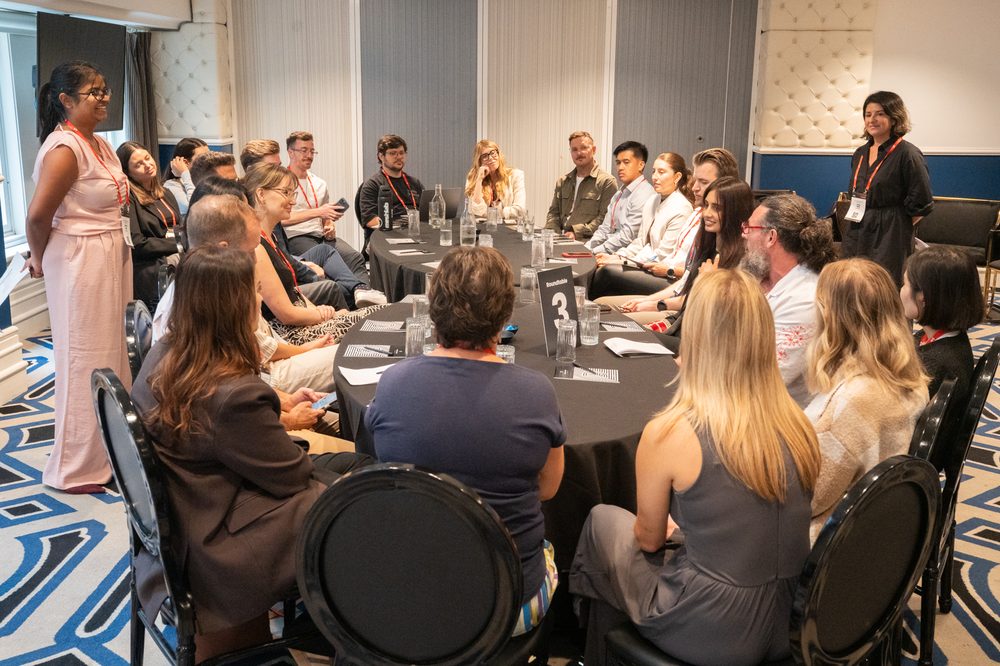
Roundtable Discussions
Small groups, real problems, peers in your seat. Ten to twelve practitioners around one table, chaired by someone who does the job, working through something the whole room is dealing with.
Keynote Presentations
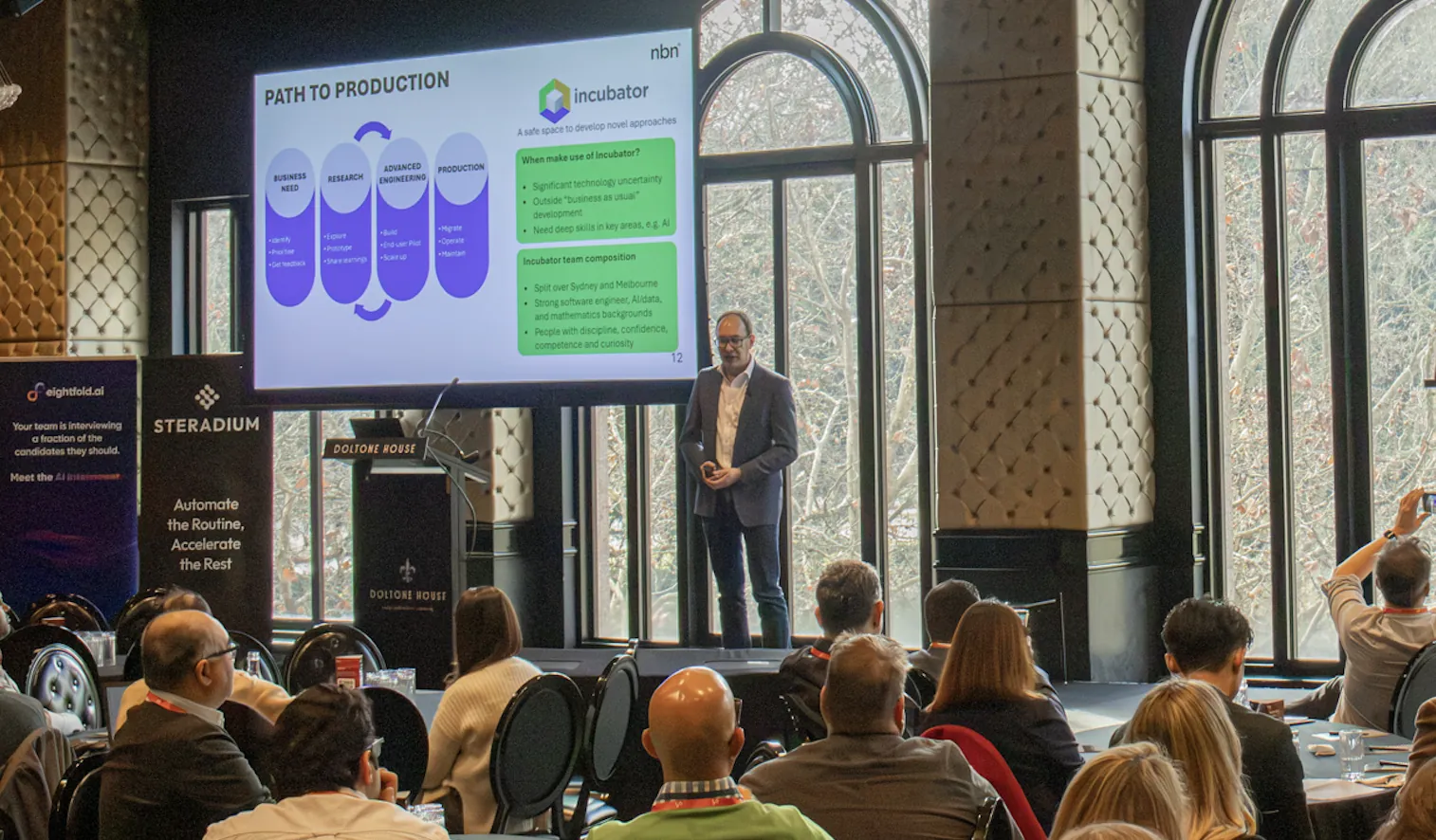
Practitioners sharing what worked, not vendor theory. What they built, what it cost, what broke, and what they would do differently.
Panel Discussions
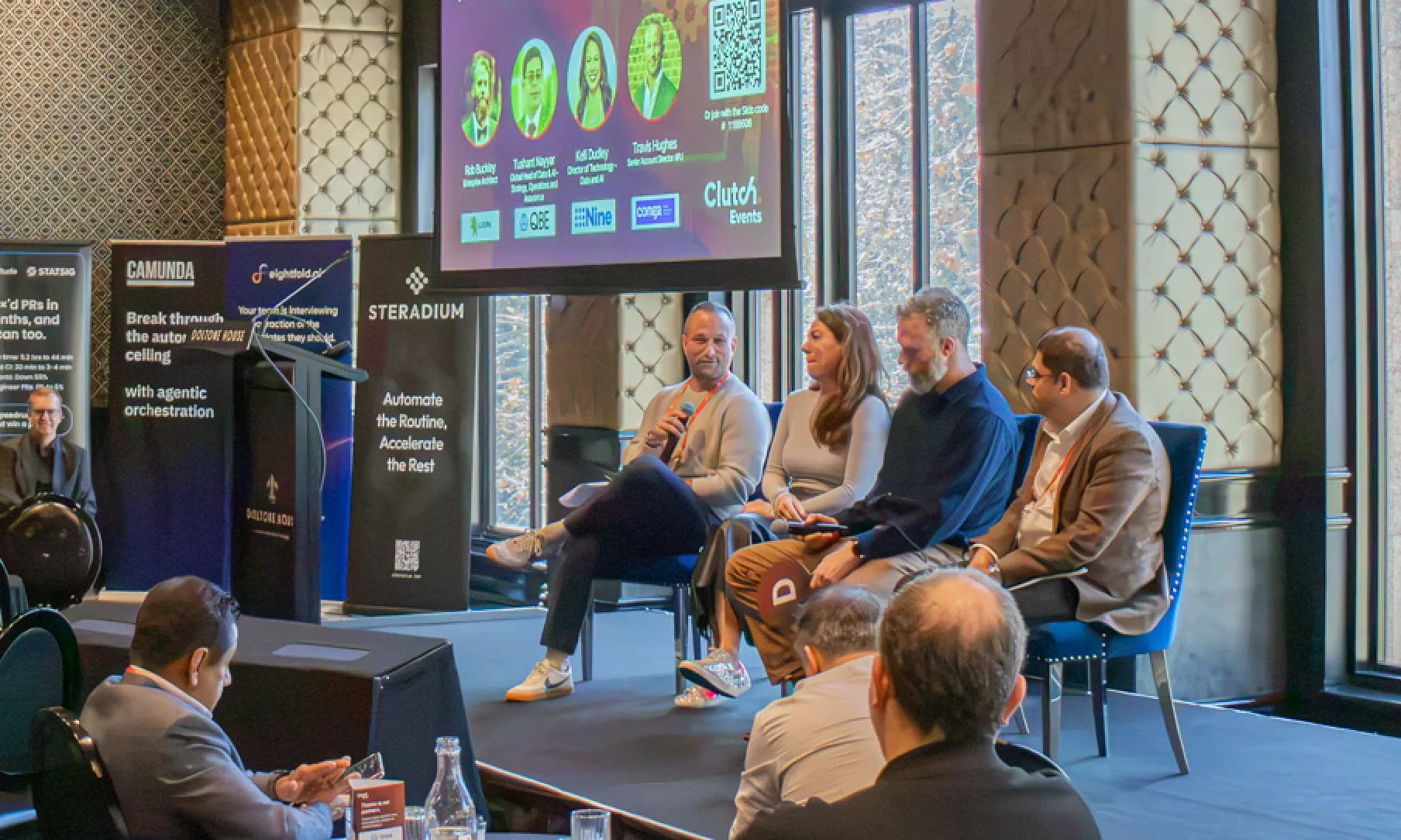
Live debate. Vote and contribute from your phone. Three or four people who genuinely disagree, a chair willing to push, and the room's answers on screen as it runs.
1-2-1 Meetings
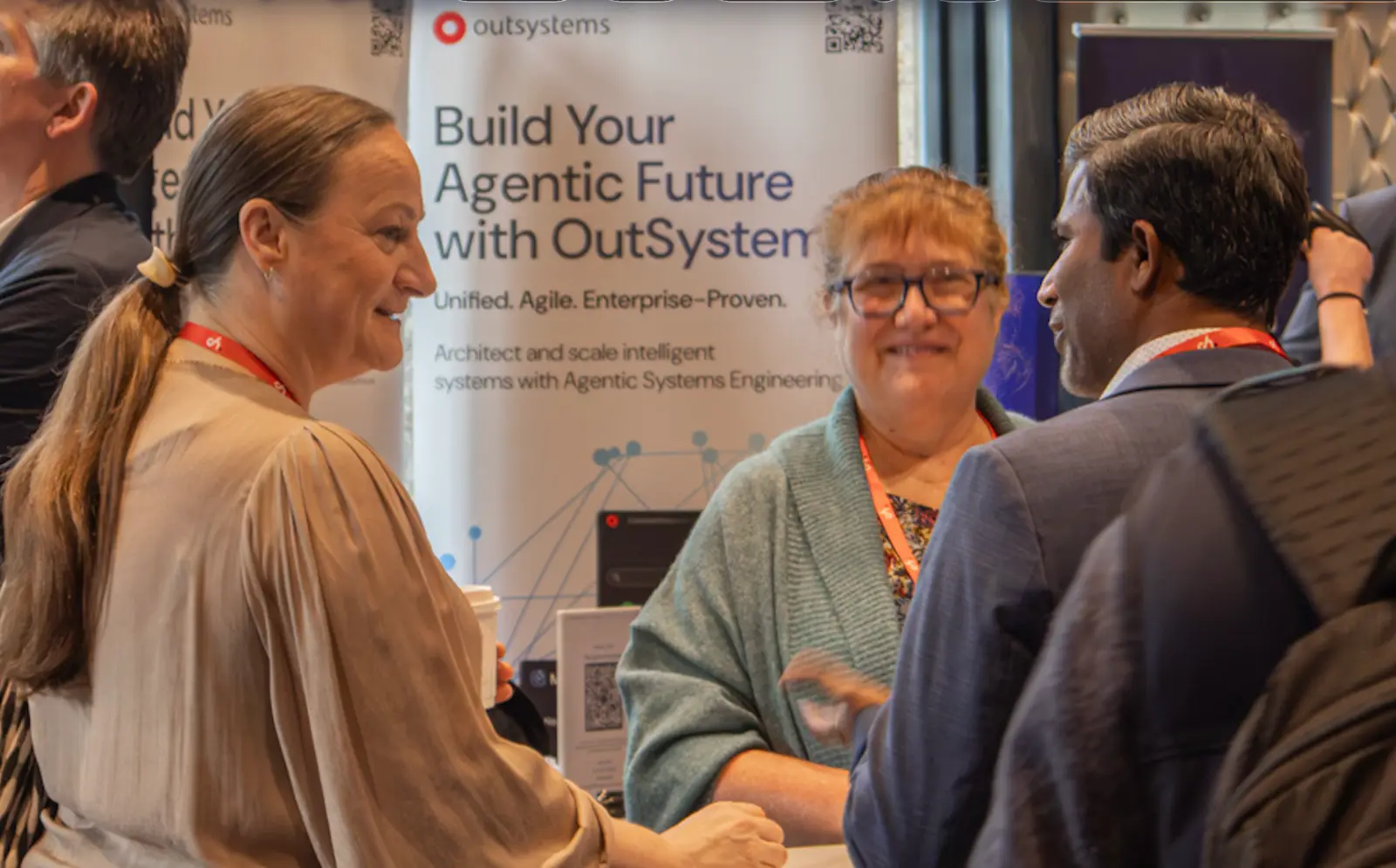
Matched to your challenges. Short meetings with solution providers based on what you flag at registration, scheduled around the rest of your day at the summit.
A day designed for momentum.
2 keynotes · 3 panels · 4 "How I Solved" case studies · 1 live audience simulation · roundtables · drinks.
Why Prototype-to-Production Keeps Getting Harder, Not Easier
Despite years of tooling maturity, the distance between an AI prototype that works and a system engineering teams would confidently put in front of production traffic keeps growing rather than shrinking. This opening keynote names that gap directly and looks at the unglamorous engineering work of closing it.
- How each generation of more capable models introduces new failure modes and scaling challenges before teams have fully hardened infrastructure for the previous generation.
- What teams are discovering about technical debt accumulated from shipping AI features on infrastructure that was never designed for agents taking real action or handling real production traffic.
- What "production-ready" actually means for AI systems in 2027, and which engineering practices genuinely transfer from traditional software infrastructure versus need to be rebuilt from scratch.
Audience Activity
A hands-on, interactive session working through a real production AI scenario as a room. Details announced soon.
Peer Roundtables
Small-group, discussion-based sessions where you'll work through real AI engineering and infrastructure challenges with peers in similar roles. Roundtable topics will be announced soon.
Think Tank: What Makes a Great AI Infrastructure Engineer, and Where Do You Find Them?
The demand for engineers who can build and operate production AI infrastructure now outpaces supply. This interactive session brings together engineering leaders to discuss what skills genuinely differentiate strong AI infrastructure talent, and how teams are building capability when the ideal hire rarely exists on the open market.
- What engineering leaders are finding actually correlates with success building and operating production AI infrastructure, versus credentials that look impressive on paper.
- How teams are weighing the cost and time of upskilling existing engineers against the increasingly expensive and competitive market for experienced AI infrastructure hires.
- Emerging patterns in how leading organisations are organising the roles and responsibilities across ML platform, infrastructure, and application engineering functions.
Registration Opens & Networking Breakfast
Beat the rush and join us early for complimentary barista-made coffee and breakfast.
Welcome & Opening Remarks
Why Prototype-to-Production Keeps Getting Harder, Not Easier
Despite years of tooling maturity, the distance between an AI prototype that works and a system engineering teams would confidently put in front of production traffic keeps growing rather than shrinking. This opening keynote names that gap directly and looks at the unglamorous engineering work of closing it.
- How each generation of more capable models introduces new failure modes and scaling challenges before teams have fully hardened infrastructure for the previous generation.
- What teams are discovering about technical debt accumulated from shipping AI features on infrastructure that was never designed for agents taking real action or handling real production traffic.
- What "production-ready" actually means for AI systems in 2027, and which engineering practices genuinely transfer from traditional software infrastructure versus need to be rebuilt from scratch.
Engineering Discipline for a Business That Runs on Margin
As AI features move from experimental budget lines to core product infrastructure with real unit economics, this keynote examines the engineering practices separating teams who've brought inference costs under genuine control from those still treating cost as a problem to solve later.
- Understanding the gap between how AI infrastructure costs are typically modelled during planning and how they actually behave once a feature reaches real usage scale.
- Practical techniques, such as caching, model routing, batching, and right-sizing model selection to task complexity, that are delivering genuine cost reduction versus optimisations that sound good but don't move the number.
- How some teams are giving engineers direct visibility into the cost implications of their architectural decisions, rather than treating cost optimisation as a separate, after-the-fact exercise.
Panel: Build, Buy, or Fine-Tune: Making the Model Selection Decision Stick for More Than a Quarter
With new frontier and open-weight models shipping faster than most engineering teams can evaluate them, this panel brings together AI and ML platform leaders to discuss how they're making model selection and infrastructure decisions durable enough to survive the next model release cycle, rather than re-architecting every few months.
- How the constant temptation to swap in the latest, most capable model is creating hidden engineering and evaluation costs that rarely get accounted for in the decision.
- Practical architectural patterns that let teams change underlying models without rewriting downstream application logic every time.
- Under what genuine technical and cost conditions teams are finding fine-tuning smaller models still outperforms simply throwing a larger frontier model at the problem.
How I Solved… Cutting Inference Costs on a Trading Desk AI
Faced with unsustainable inference costs on a real-time trading desk copilot where every millisecond of added latency had genuine financial consequences, one fintech infrastructure leader rebuilt the model-serving pipeline to dramatically cut costs while keeping response times within trading-critical thresholds.
- How the team identified which optimisations could reduce cost without violating the strict latency requirements the trading use case demanded.
- How the team built a routing layer that sent simpler queries to smaller, cheaper models while reserving frontier model calls for genuinely complex requests.
- How the team validated that cost and latency improvements remained stable during high-volume, high-volatility trading periods, not just steady-state conditions.
Morning Tea & Networking
Audience Activity
A hands-on, interactive session working through a real production AI scenario as a room. Details announced soon.
How I Solved… An Audit Trail for an AI Underwriting System That Survived Regulatory Examination
Anticipating scrutiny from state insurance regulators and internal compliance over an AI-assisted underwriting system, one insurtech engineering leader built decision provenance and audit logging directly into the system architecture, turning what could have been a compliance liability into a documented strength during examination.
- How the team anticipated the specific documentation regulators would require and built logging architecture around those anticipated questions from the outset.
- The specific technical approach used to log sufficient detail for audit purposes without introducing unacceptable latency or storage overhead.
- How having audit infrastructure built in from day one meant the regulatory examination process was substantially smoother than the team had originally feared.
How I Stopped an Agentic Workflow From Cascading a Small Error Into a Major Incident
After a production agent chained a minor tool-call error into a significant downstream data corruption incident, one platform engineering leader rebuilt the agent's permission and validation architecture to contain failures before they could cascade.
- How the team traced the incident back to insufficient validation between chained tool calls, where an early mistake wasn't caught before triggering further automated actions.
- The specific validation and rollback checkpoints introduced between agent actions to prevent a single error from propagating through an entire workflow.
- How the team redesigned the agent's access model around least-privilege principles, limiting the blast radius of any future error regardless of cause.
Panel: Compliance as Code
Financial services, healthcare, and other regulated industries are facing increasingly specific requirements around AI system auditability and explainability. This panel explores how engineering teams are building compliance directly into system architecture rather than bolting it on after the fact.
- Concrete examples of the evidence and documentation regulators expect when reviewing AI systems used in regulated contexts.
- Technical patterns for capturing decision provenance, model versioning, and prompt history in a way that satisfies compliance review without crippling system performance.
- Honest comparison of the effort and technical debt incurred by teams who built compliance requirements in from day one versus those who tried to add them after a system was already in production.
Peer Roundtables
Small-group, discussion-based sessions where you'll work through real AI engineering and infrastructure challenges with peers in similar roles. Roundtable topics will be announced soon.
Lunch & Networking
QuickFire Quiz: Test Your Knowledge Against Your Peers
Put your knowledge to the test in this fast-paced quiz covering real-world trivia, key concepts, and emerging trends. Compete for bragging rights — and a voucher — as the top scorer takes the crown.
How I Solved… Moving an AI Platform From Single-Cloud Dependency Without a Full Rebuild
Facing growing board-level concern about single-cloud provider dependency for a HIPAA-regulated AI platform, one healthtech infrastructure leader built a pragmatic portability layer that reduced genuine lock-in risk without the cost and disruption of a full multi-cloud rebuild.
- How the team assessed which specific dependencies posed genuine commercial or continuity risk, rather than pursuing full portability for its own sake.
- The selective approach taken to make the most business-critical parts of the platform portable, while leaving lower-risk components as-is to avoid unnecessary complexity.
- How the team communicated the risk reduction achieved to leadership in a way that addressed the underlying concern without needing to claim full multi-cloud parity.
Reliability Without the Old Playbook: Rethinking SRE Practice for Non-Deterministic Systems
Site reliability engineering practices built around deterministic systems and predictable failure modes are meeting AI systems whose behaviour varies run to run. This talk examines what reliability engineering genuinely requires when you can't fully predict what your system will do with a given input.
- How uptime and latency metrics, while still necessary, fail to capture the quality and consistency failures that matter most for AI-driven features.
- How leading teams are treating continuous evaluation of model output quality as a core reliability discipline, on par with traditional uptime monitoring.
- Which traditional infrastructure and reliability practices genuinely transfer to AI systems, and where practitioners still need to build something new.
Think Tank: What Makes a Great AI Infrastructure Engineer, and Where Do You Find Them?
The demand for engineers who can build and operate production AI infrastructure now outpaces supply. This interactive session brings together engineering leaders to discuss what skills genuinely differentiate strong AI infrastructure talent, and how teams are building capability when the ideal hire rarely exists on the open market.
- What engineering leaders are finding actually correlates with success building and operating production AI infrastructure, versus credentials that look impressive on paper.
- How teams are weighing the cost and time of upskilling existing engineers against the increasingly expensive and competitive market for experienced AI infrastructure hires.
- Emerging patterns in how leading organisations are organising the roles and responsibilities across ML platform, infrastructure, and application engineering functions.
Closing Remarks & Prize Draw
Networking Drinks Hour
Unwind with your peers for a couple of drinks on us!
Event Closed
Registration Opens & Networking Breakfast
Beat the rush and join us early for complimentary barista-made coffee and breakfast.
Welcome & Opening Remarks
Why Prototype-to-Production Keeps Getting Harder, Not Easier
Despite years of tooling maturity, the distance between an AI prototype that works and a system engineering teams would confidently put in front of production traffic keeps growing rather than shrinking. This opening keynote names that gap directly and looks at the unglamorous engineering work of closing it.
- How each generation of more capable models introduces new failure modes and scaling challenges before teams have fully hardened infrastructure for the previous generation.
- What teams are discovering about technical debt accumulated from shipping AI features on infrastructure that was never designed for agents taking real action or handling real production traffic.
- What "production-ready" actually means for AI systems in 2027, and which engineering practices genuinely transfer from traditional software infrastructure versus need to be rebuilt from scratch.
Engineering Discipline for a Business That Runs on Margin
As AI features move from experimental budget lines to core product infrastructure with real unit economics, this keynote examines the engineering practices separating teams who've brought inference costs under genuine control from those still treating cost as a problem to solve later.
- Understanding the gap between how AI infrastructure costs are typically modelled during planning and how they actually behave once a feature reaches real usage scale.
- Practical techniques, such as caching, model routing, batching, and right-sizing model selection to task complexity, that are delivering genuine cost reduction versus optimisations that sound good but don't move the number.
- How some teams are giving engineers direct visibility into the cost implications of their architectural decisions, rather than treating cost optimisation as a separate, after-the-fact exercise.
Panel: Build, Buy, or Fine-Tune: Making the Model Selection Decision Stick for More Than a Quarter
With new frontier and open-weight models shipping faster than most engineering teams can evaluate them, this panel brings together AI and ML platform leaders to discuss how they're making model selection and infrastructure decisions durable enough to survive the next model release cycle, rather than re-architecting every few months.
- How the constant temptation to swap in the latest, most capable model is creating hidden engineering and evaluation costs that rarely get accounted for in the decision.
- Practical architectural patterns that let teams change underlying models without rewriting downstream application logic every time.
- Under what genuine technical and cost conditions teams are finding fine-tuning smaller models still outperforms simply throwing a larger frontier model at the problem.
How I Solved… Cutting Inference Costs on a Trading Desk AI
Faced with unsustainable inference costs on a real-time trading desk copilot where every millisecond of added latency had genuine financial consequences, one fintech infrastructure leader rebuilt the model-serving pipeline to dramatically cut costs while keeping response times within trading-critical thresholds.
- How the team identified which optimisations could reduce cost without violating the strict latency requirements the trading use case demanded.
- How the team built a routing layer that sent simpler queries to smaller, cheaper models while reserving frontier model calls for genuinely complex requests.
- How the team validated that cost and latency improvements remained stable during high-volume, high-volatility trading periods, not just steady-state conditions.
Morning Tea & Networking
Audience Activity
A hands-on, interactive session working through a real production AI scenario as a room. Details announced soon.
How I Solved… An Audit Trail for an AI Underwriting System That Survived Regulatory Examination
Anticipating scrutiny from state insurance regulators and internal compliance over an AI-assisted underwriting system, one insurtech engineering leader built decision provenance and audit logging directly into the system architecture, turning what could have been a compliance liability into a documented strength during examination.
- How the team anticipated the specific documentation regulators would require and built logging architecture around those anticipated questions from the outset.
- The specific technical approach used to log sufficient detail for audit purposes without introducing unacceptable latency or storage overhead.
- How having audit infrastructure built in from day one meant the regulatory examination process was substantially smoother than the team had originally feared.
How I Stopped an Agentic Workflow From Cascading a Small Error Into a Major Incident
After a production agent chained a minor tool-call error into a significant downstream data corruption incident, one platform engineering leader rebuilt the agent's permission and validation architecture to contain failures before they could cascade.
- How the team traced the incident back to insufficient validation between chained tool calls, where an early mistake wasn't caught before triggering further automated actions.
- The specific validation and rollback checkpoints introduced between agent actions to prevent a single error from propagating through an entire workflow.
- How the team redesigned the agent's access model around least-privilege principles, limiting the blast radius of any future error regardless of cause.
Panel: Compliance as Code
Financial services, healthcare, and other regulated industries are facing increasingly specific requirements around AI system auditability and explainability. This panel explores how engineering teams are building compliance directly into system architecture rather than bolting it on after the fact.
- Concrete examples of the evidence and documentation regulators expect when reviewing AI systems used in regulated contexts.
- Technical patterns for capturing decision provenance, model versioning, and prompt history in a way that satisfies compliance review without crippling system performance.
- Honest comparison of the effort and technical debt incurred by teams who built compliance requirements in from day one versus those who tried to add them after a system was already in production.
Peer Roundtables
Small-group, discussion-based sessions where you'll work through real AI engineering and infrastructure challenges with peers in similar roles. Roundtable topics will be announced soon.
Lunch & Networking
QuickFire Quiz: Test Your Knowledge Against Your Peers
Put your knowledge to the test in this fast-paced quiz covering real-world trivia, key concepts, and emerging trends. Compete for bragging rights — and a voucher — as the top scorer takes the crown.
How I Solved… Moving an AI Platform From Single-Cloud Dependency Without a Full Rebuild
Facing growing board-level concern about single-cloud provider dependency for a HIPAA-regulated AI platform, one healthtech infrastructure leader built a pragmatic portability layer that reduced genuine lock-in risk without the cost and disruption of a full multi-cloud rebuild.
- How the team assessed which specific dependencies posed genuine commercial or continuity risk, rather than pursuing full portability for its own sake.
- The selective approach taken to make the most business-critical parts of the platform portable, while leaving lower-risk components as-is to avoid unnecessary complexity.
- How the team communicated the risk reduction achieved to leadership in a way that addressed the underlying concern without needing to claim full multi-cloud parity.
Reliability Without the Old Playbook: Rethinking SRE Practice for Non-Deterministic Systems
Site reliability engineering practices built around deterministic systems and predictable failure modes are meeting AI systems whose behaviour varies run to run. This talk examines what reliability engineering genuinely requires when you can't fully predict what your system will do with a given input.
- How uptime and latency metrics, while still necessary, fail to capture the quality and consistency failures that matter most for AI-driven features.
- How leading teams are treating continuous evaluation of model output quality as a core reliability discipline, on par with traditional uptime monitoring.
- Which traditional infrastructure and reliability practices genuinely transfer to AI systems, and where practitioners still need to build something new.
Think Tank: What Makes a Great AI Infrastructure Engineer, and Where Do You Find Them?
The demand for engineers who can build and operate production AI infrastructure now outpaces supply. This interactive session brings together engineering leaders to discuss what skills genuinely differentiate strong AI infrastructure talent, and how teams are building capability when the ideal hire rarely exists on the open market.
- What engineering leaders are finding actually correlates with success building and operating production AI infrastructure, versus credentials that look impressive on paper.
- How teams are weighing the cost and time of upskilling existing engineers against the increasingly expensive and competitive market for experienced AI infrastructure hires.
- Emerging patterns in how leading organisations are organising the roles and responsibilities across ML platform, infrastructure, and application engineering functions.
Closing Remarks & Prize Draw
Networking Drinks Hour
Unwind with your peers for a couple of drinks on us!
Event Closed
Why engineering leaders return year after year.


Backed by the platforms your team actually runs on

Register in under 60 seconds.
Complimentary Full-day access to keynotes, panels & case studies
Common questions.
What do I need to bring?
Just bring yourself, your laptop or a notebook and get ready to collaborate!
Will sessions be recorded or live-streamed?
No. You'll have to be there to enjoy the sessions.
Will there be WiFi?
Yes, absolutely! Stay connected at the event with complimentary wifi - we'll share the details at the event.
Will food and drinks be provided?
Yes, morning tea, lunch, and afternoon refreshments will be provided. Please indicate any dietary requirements during registration.
Are Chatham House Rules in effect?
Absolutely! No media, recordings, or live streaming... what happens in the room, stays in the room.
What is the dress code?
Smart casual or business casual is recommended, no need for a suit and tie! Keep it comfortable.
Are there any fees to attend?
Nope! The conference is completely free for industry professionals. Contact us if you are not sure whether you qualify.
Getting there.
97 days left.
Register free today.
Be the engineering leader in the room — not the one reading the LinkedIn recap.
Contact our event team for any enquiry


