
Sydney Engineering and DevOps Summit 2026
Join us in Sydney for the third edition of the Engineering and DevOps Summit, where you'll learn how to transform your app development and join top developers and tech leaders for hands-on sessions and expert insights on cloud-native technologies, from microservices to Kubernetes.

Join us at the Engineering and DevOps to revolutionise your application development.
We're bringing together developers, engineers, and technology leaders to explore how cloud-native technologies are transforming the way we build applications.
Discover best practices for microservices architecture, deploying and scaling applications with Kubernetes, and implementing continuous integration and delivery. Learn about service mesh security, serverless computing, and cloud observability and monitoring. Engage in interactive sessions, real-world case studies, panel discussions, and debates to stay ahead of emerging trends in cloud-native development.
Key Themes:
- How Cloud-Native is Transforming Application Development
- Microservices Architecture
- Deploying and Scaling Applications with Kubernetes
- Implementing Continuous Integration and Delivery
- Service Mesh Security
- Serverless Computing
- Cloud Observability and Monitoring
- Monolith vs. Microservices: What Works Best
Register now to secure your place and receive announcements.
Our Speakers




















.png)







Agenda
Beat the rush and join us early for complimentary barista-made coffee and breakfast.
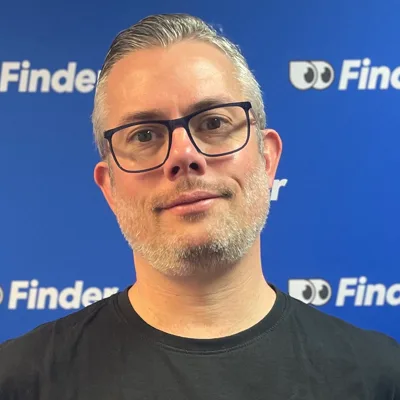
Most companies are bolting AI onto businesses designed for a pre-AI world and struggling to prove the return. Joe is doing something harder: rebuilding Finder as a 100% AI-native business, where AI is the foundation, not a feature, and where ROI is measured at the level of the business model, not the pilot project.
In this keynote, Joe shares what AI-native really means in practice: the strategy, the platform decisions, the organisational shifts, and how to build a credible ROI case when AI moves from a productivity tool to the core operating model.
A frank, practitioner's view from a CTO making the bet in real time.
- What "AI-native" really means and how it differs from "AI-enabled"
- The platform, team, and value-chain shifts that make the transition real
- How to measure and defend ROI when AI becomes the business, not a line item
AI coding agents are transforming software engineering, acting as hyper-fast team members that generate code, run commands, and trigger builds at unprecedented speed. However, this rapid shift introduces two critical friction points for enterprise tech leaders: uncontrolled operational spend caused by agent context bloat and model switching, and unprecedented supply chain risk as automated agents ingest unvetted dependencies and release AI-generated artifacts.
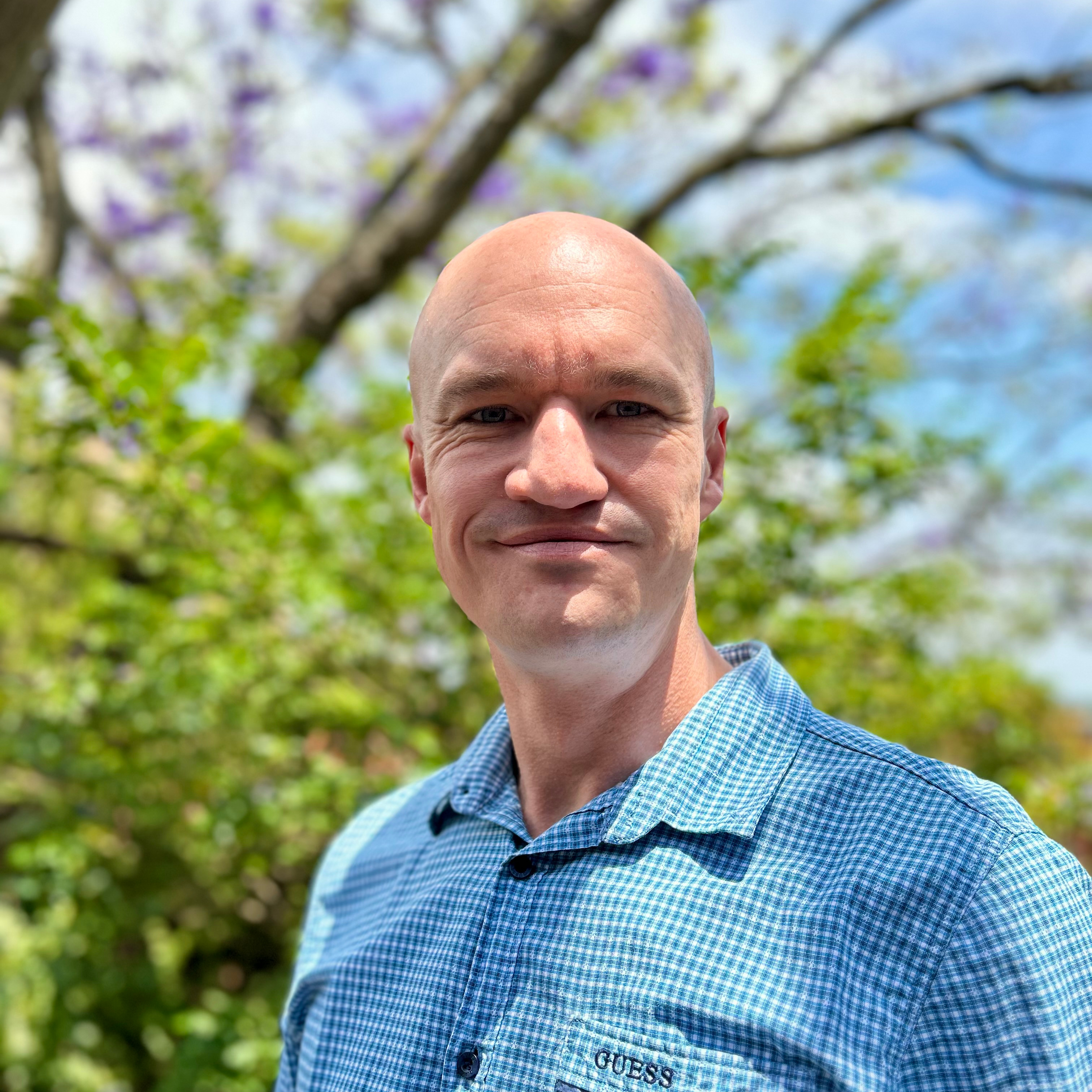
In this keynote, Mike Holland (Sr. Solutions Engineer, JFrog) explores how organisations can achieve friction-free velocity while maintaining fiscal discipline and ironclad security.
We’ll Cover:
- Agent Efficiency: How to optimise developer workflows with smart output compression (JFrog Boost).
- Securing the AI Supply Chain: Why traditional source-code scanning falls short when AI agents pull third-party packages and model weights, and why binary-level visibility is essential.
- A Single System of Record: How to unite developer experience, token control, and enterprise governance across the entire lifecycle from prompt to production.
AI agents are now writing code, deploying systems, and making real production decisions. But when things go wrong, model drift, data leaks, or outages, most organisations can’t answer three simple questions: Did we catch it? Who’s responsible? How do we prevent it next time?
This panel brings together engineering, platform, and security leaders tackling a new reality: AI is breaking both observability and accountability.
We’ll cover:
- Why traditional monitoring misses AI failures and what’s replacing it
- Where accountability sits when AI makes decisions
- How to design audit trails, guardrails, and escalation paths for AI systems
- Lessons from early AI incidents what was caught, what wasn’t, and who took responsibility
- What regulators, boards, and customers now expect
Vulnerabilities are now found faster than your team can patch them, and the software supply chain has become an active malware delivery channel. For engineering leaders this is showing up as an unbounded queue of security work you didn't plan for, against a release process designed in a different time.
You can't triage your way out, and you can't hire your way out either. The way out is delivery engineering. The ability to rebuild and ship safely, on demand, without drama.
We'll cover:
- What delivery engineering actually takes to rebuild and ship safely, on demand
- Why the instinctive answers- triaging harder, hiring more - fail
- How teams that get it right end up shipping features faster
In this innovative session, attendees will be faced with a series of scenarios that they may face in their roles. Attendees will discuss the possible courses of action with their peers to consider the ramifications of each option before logging their own course of action.
Results will be tallied and analysed by our session facilitator and results will impact the way the group moves through the activity.
Will we collectively choose the right course of action?
Moving beyond tools and ceremonies to the engineering systems, automation, controls and operating models that make DevOps work reliably at scale.
Key Takeaways
- Tooling isn't the differentiator: the systems and controls wrapped around it are.
- Ceremony without ownership creates false confidence, not maturity.
- Operating model design scales better than manually enforced "best practices."
AI is accelerating software development, increasing both the speed and volume of code being produced. For security teams, this means more findings to assess, prioritise and remediate - without slowing developers down.
This session demonstrates how Checkmarx Developer Assist brings security directly into the developer workflow to identify, understand and fix vulnerabilities as they code, while AI-powered Triage and Remediation helps security teams quickly understand and prioritise what matters.
The result: less manual effort, faster remediation, and security that keeps pace with modern development.
Platform engineering has moved from a trend to a strategic bet. The organisations winning with AI, managing cloud spend, and scaling delivery all have one thing in common: they've treated their internal platform as a product.
This panel brings together engineering leaders who've built platforms their teams actually use, and made the business case to fund them.
What we’ll cover:
- Why platform-first is no longer optional for any engineering organisation above a certain size
- How to structure, staff, and fund platform teams as a strategic capability
- The hard parts: adoption, governance, and avoiding internal tooling sprawl
- Where data, environments, and developer experience intersect in a modern platform
Select a topic of discussion and engage in an interactive roundtable discussion with a group of your like-minded peers.
Put your knowledge to the test in this fast-paced quiz covering real-world trivia, key concepts, and emerging trends. Compete for bragging rights - and a travel voucher - as the top scorer takes the crown.
BlueApp, Blue Pearl’s high-volume consultant-matching platform, faced growing challenges on Java 11, including deprecated APIs, dependency incompatibilities, and increasing maintenance overhead. Upgrading to Java 25 (LTS) was critical for security, compliance, and performance but traditionally would have required weeks of engineering effort. In this session, we’ll walk through how we completed the full uplift in just 3 days with zero post-deployment defects using IBM Bob. You’ll gain practical insights in improving developer productivity and creating a repeatable framework for upgrading legacy applications at scale.
Attendees will learn:
- How to accelerate Java modernisation with AI-assisted upgrades, refactoring, and dependency management
- How to reduce modernisation risk using system insights, governance workflows, and integrated security scanning
- How to modernise CI/CD, testing, and deployment workflows while improving delivery speed, cost, and stability
When your software runs on a medical device keeping someone breathing, "moving fast and breaking things" isn't an option, but moving slowly isn't either. This session looks at how to build engineering teams and delivery pipelines that are both fast and safe, and where AI genuinely helps versus where it quietly adds risk in high-stakes, regulated environments.
We'll cover:
- Building CI/CD and test strategy that holds up under regulatory scrutiny without grinding delivery to a halt
- Scaling embedded and device software teams through multiple product cycles, capability, structure, and quality as you grow
- Where AI is earning its place in safety-critical delivery, and where the hype doesn't survive contact with real accountability
Large organisations are cutting roles. Graduate pipelines are shrinking. AI is absorbing work that used to take teams of engineers. This is the uncomfortable conversation the industry isn't having openly yet.
This interactive think tank puts these issues to the room. Participants vote live on the scenarios shaping the next five years of Australian engineering, explore the results together, and vote again as perspectives shift.
- What roles disappear, what roles emerge, and what stays the same?
- How should we train, hire, and develop engineers in an AI-native world?
- Is the junior engineer dead? What's the entry pathway now?
- What's the Australian engineering profession's responsibility to its own people?
- Where does this leave engineering leadership in 2030?
Unwind with your peers for a couple of drinks on us!
Our event sponsors






Past Speaker Highlights





Past Sponsors




.png)
Event Location
Doltone House Hyde Park

About Clutch
Hyper-Niche Content
Our conferences are specific to niche sub-sets of the technology industry, drilling down into the biggest issues, challenges and market trends facing tomorrow's leaders.
Collaboration first
Enjoy ample networking opportunities, roundtable discussions, interactive group sessions and real-world case-studies that arm attendees with actionable insights.
Dynamic & Bite-Size formats
No more death-by-PowerPoint. Our events are short, sharp and collaborative with a variety of session formats and a 3/4 day commitment to ensure returns on your time investment.
Get In Touch
Contact our event team for any enquiry

Danny Perry
For sponsorship opportunities.

Lili Munar
For guest and attendee enquiries.

Steph Tolmie
For speaking opportunities & content enquiries.

Taylor Stanyon
For event-related enquiries.