
UK AI Engineering & Infrastructure Summit 2027
Join us at the inaugural UK AI Engineering and Infrastructure Summit. One day of practitioner-led sessions on shipping reliable AI to production, AI Growth Zones and grid connection, cross-border data pipelines, and sovereign compute. Free-to-attend.
The engineering playbook for teams shipping AI to production.
Your peers

Chief AI Officer Chief Information Officer Chief Technology Officer Chief Data Officer Chief Digital and Information Officer VP Data and AI

VP Engineering Head of AI Head of AI Platforms Head of Data and AI Head of Data Engineering Head of Engineering

Head of Generative AI Head of Applied AI Head of Machine Learning Head of Responsible AI Head of AI Governance Head of Data Science
Concrete deliverables, not just notes.
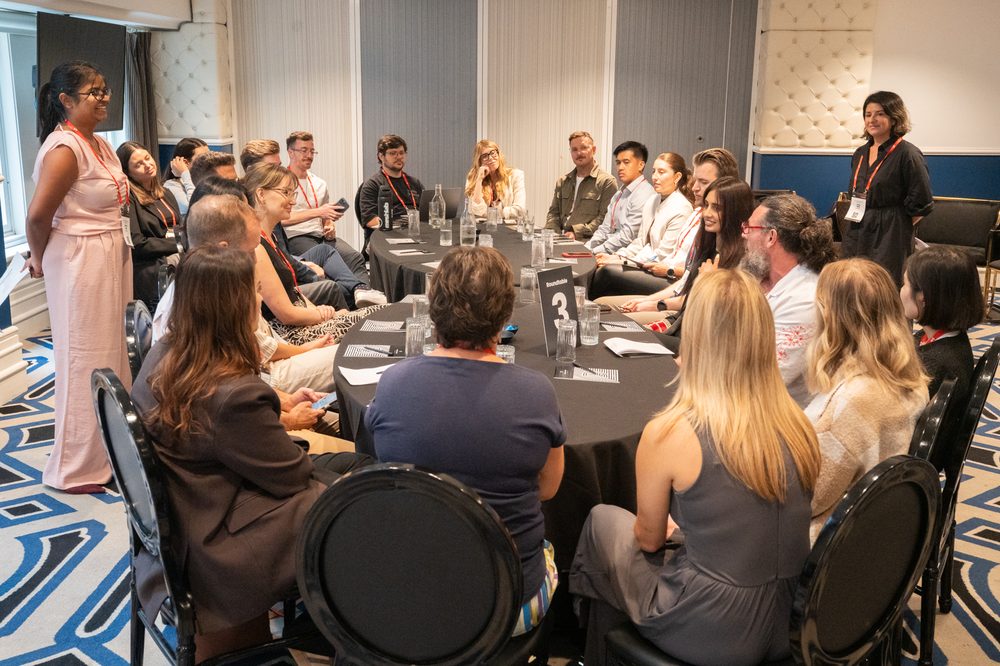
Roundtable Discussions
Small groups, real problems, peers in your seat. Ten to twelve practitioners around one table, chaired by someone who does the job, working through something the whole room is dealing with.
Keynote Presentations
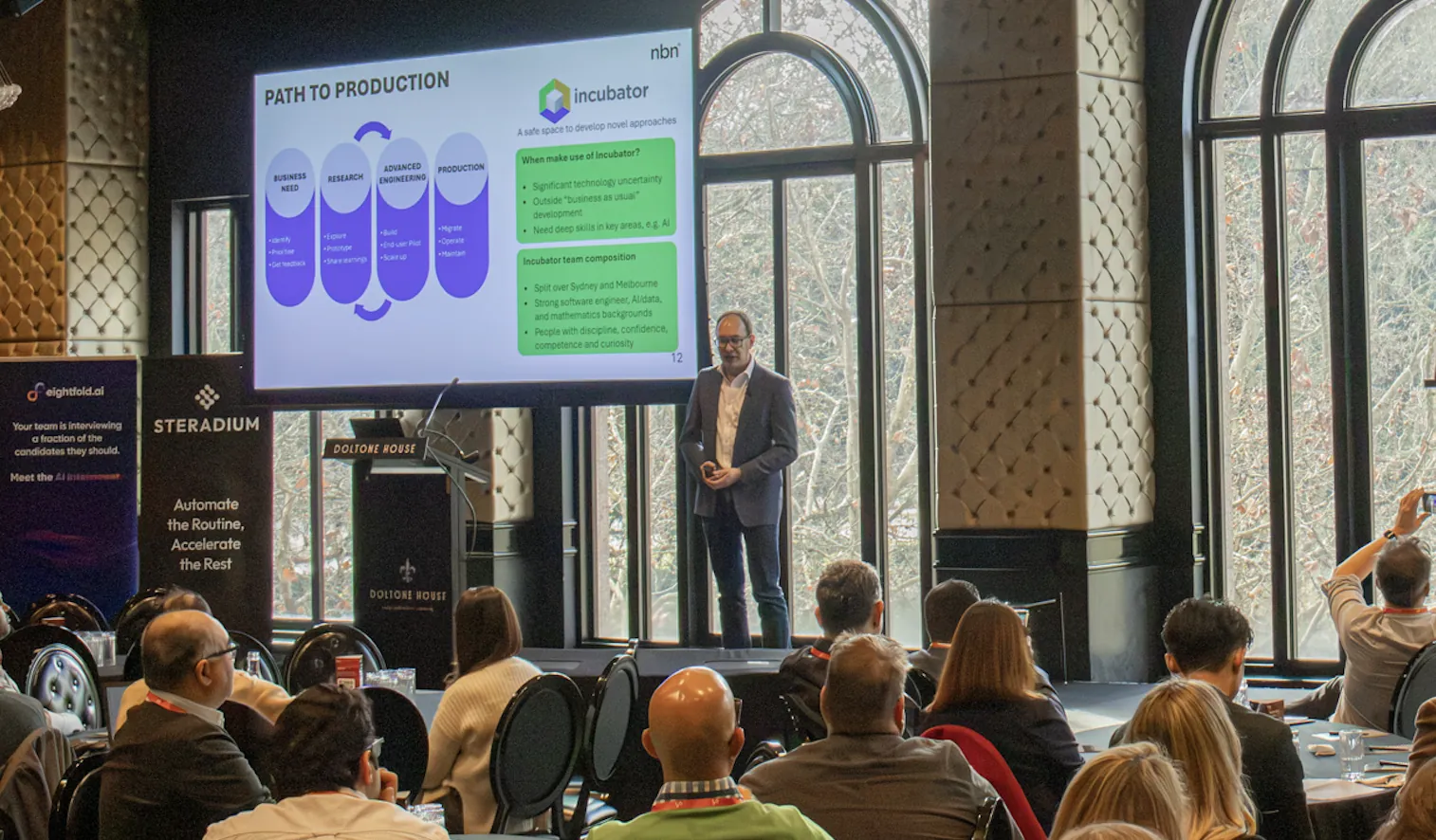
Practitioners sharing what worked, not vendor theory. What they built, what it cost, what broke, and what they would do differently.
Panel Discussions
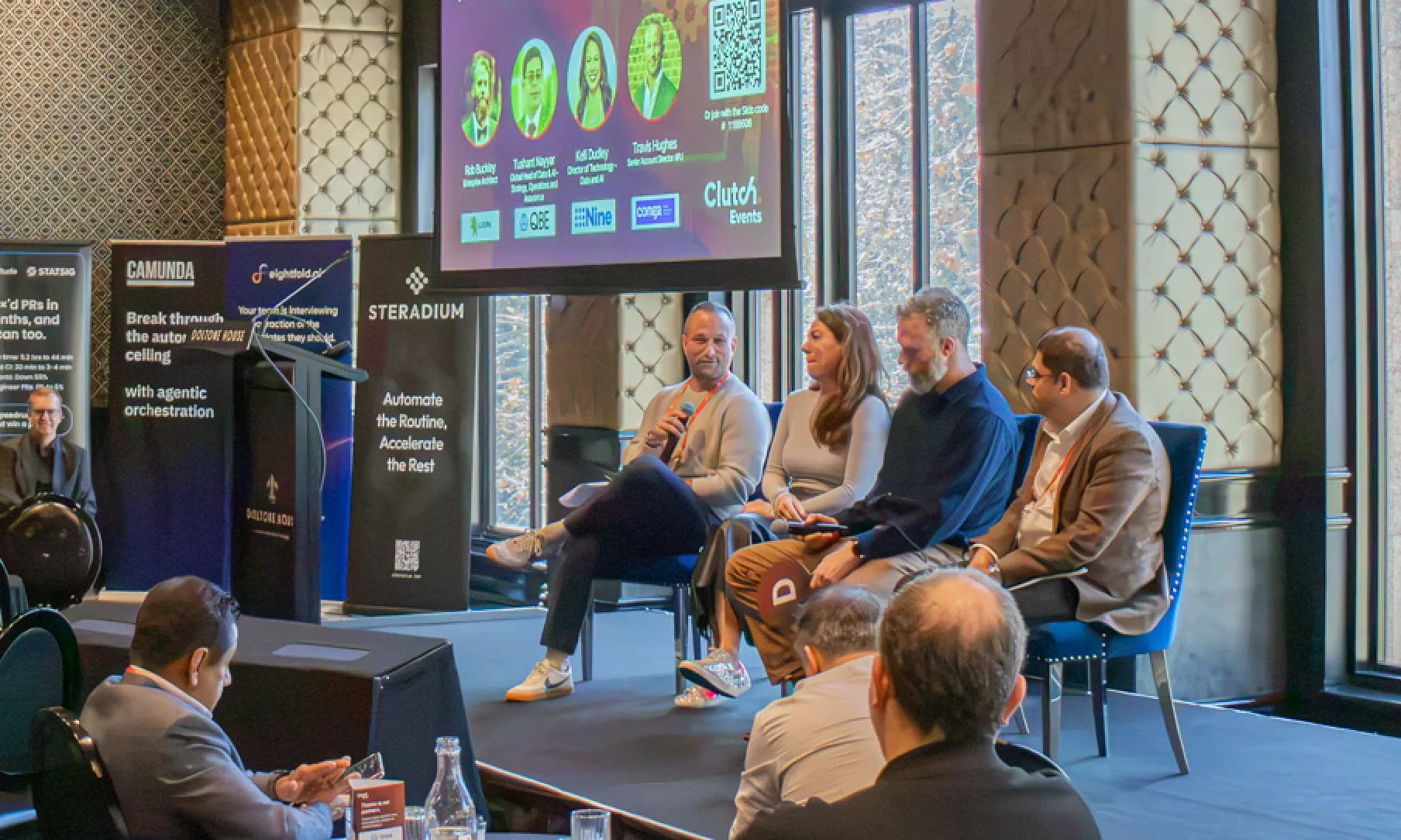
Live debate. Vote and contribute from your phone. Three or four people who genuinely disagree, a chair willing to push, and the room's answers on screen as it runs.
1-2-1 Meetings
Matched to your challenges. Short meetings with solution providers based on what you flag at registration, scheduled around the rest of your day at the summit.

A day designed for momentum.
2 keynotes · 3 panels · 4 "How I Solved" case studies · 1 live audience simulation · roundtables · drinks.
Engineering Compliance In, Not Bolting It On
As engineering teams building AI systems for financial services, healthcare, and other regulated sectors across the UK and EU face requirements around data residency, explainability, and algorithmic accountability, this keynote examines what it actually takes to build compliance into system architecture from the outset, rather than retrofitting it once a system is already in production.
- Concrete technical requirements flowing from the EU AI Act's classification of AI systems by risk level, and how that classification shapes data pipeline, logging, and model architecture decisions.
- Practical engineering approaches to keeping sensitive data within UK or EU jurisdictions while still accessing the compute and model infrastructure needed for competitive AI performance.
- What engineering teams are learning about the level of decision provenance and model documentation the ICO, FCA, and EU regulators genuinely expect, versus what teams initially assumed would be sufficient.
Audience Activity
A hands-on, interactive session working through a real production AI scenario as a room. Details announced soon.
Peer Roundtables
Small-group, discussion-based sessions where you'll work through real AI engineering and infrastructure challenges with peers in similar roles. Roundtable topics will be announced soon.
Think Tank: Open Weight Models in Regulated Environments: Genuine Opportunity or False Economy?
As open-weight models offer teams greater control over deployment, data handling, and cost compared to closed API-based models, this interactive session discusses whether that control genuinely translates into easier regulatory compliance and lower total cost, or whether it shifts complexity onto engineering teams in ways that aren't always accounted for.
- Cases where running open-weight models in-house or in-region has made data protection and audit requirements meaningfully easier to satisfy.
- Honest accounting of the operational overhead that shifts onto engineering teams once they own the model rather than calling an API.
- How teams are building accurate cost comparisons between open-weight self-hosting and commercial API usage, factoring in the engineering time compliance and maintenance actually consume.
Registration Opens & Networking Breakfast
Beat the rush and join us early for complimentary barista-made coffee and breakfast.
Welcome & Opening Remarks
Engineering Compliance In, Not Bolting It On
As engineering teams building AI systems for financial services, healthcare, and other regulated sectors across the UK and EU face requirements around data residency, explainability, and algorithmic accountability, this keynote examines what it actually takes to build compliance into system architecture from the outset, rather than retrofitting it once a system is already in production.
- Concrete technical requirements flowing from the EU AI Act's classification of AI systems by risk level, and how that classification shapes data pipeline, logging, and model architecture decisions.
- Practical engineering approaches to keeping sensitive data within UK or EU jurisdictions while still accessing the compute and model infrastructure needed for competitive AI performance.
- What engineering teams are learning about the level of decision provenance and model documentation the ICO, FCA, and EU regulators genuinely expect, versus what teams initially assumed would be sufficient.
Building AI Infrastructure When You Don't Control the Underlying Chips or Clouds
With the UK's AI compute capacity heavily dependent on a small number of international cloud and chip providers, this keynote examines the practical engineering and strategic implications of building critical AI infrastructure on a foundation the country doesn't itself control.
- How reliance on offshore cloud and chip providers shapes practical decisions around cost, latency, and contingency planning for UK-based AI infrastructure.
- Practical patterns teams are using to balance British data sovereignty ambitions against the reality that the most capable infrastructure often sits outside direct control.
- How emerging government initiatives around domestic compute capacity could reshape the infrastructure choices available to engineering teams in the coming years.
Panel: Engineering for a Stack That Can't Depend on One Provider
As engineering teams weigh AI Act compliance requirements alongside genuine commercial risk from provider dependency, this panel examines how teams are architecting systems that can genuinely operate across multiple model providers without the complexity becoming its own liability.
- Concrete examples of teams who've built provider-agnostic systems and found real resilience benefits, versus those where the abstraction added more complexity than protection.
- What it actually takes to maintain output consistency and reliability testing across providers whose models behave differently, rather than assuming a common interface solves the problem.
- Building the case internally for when consolidating on a single provider is the more defensible engineering and commercial decision, despite pressure to diversify for its own sake.
How I Built a Single Data Pipeline That Satisfied UK and EU Requirements
Serving customers across both the UK and EU with diverging data protection requirements post-Brexit, one SaaS platform's engineering leader built a unified data pipeline architecture that satisfied both jurisdictions' requirements without maintaining costly duplicate infrastructure.
- How the team identified the specific, genuine points of difference between the two frameworks rather than assuming full divergence and over-engineering separate systems.
- The architectural decision to build a single pipeline calibrated to whichever jurisdiction's requirement was more stringent for each specific data handling decision.
- How the team structured the system to adapt if UK-EU regulatory alignment shifted further, without requiring a full architectural rebuild each time.
Morning Tea & Networking
Audience Activity
A hands-on, interactive session working through a real production AI scenario as a room. Details announced soon.
How I Solved… Recovery From a Sovereign Compute Shortage That Nearly Delayed a Contract
After discovering that committed compute capacity from an offshore cloud provider couldn't guarantee the data sovereignty terms a government contract required, one systems integrator rebuilt the deployment plan around regional compute options under significant time pressure.
- How the team identified that their original compute plan wouldn't actually satisfy the sovereignty commitments made to the government client, before it became a delivery failure.
- The technical trade-offs made to fit the project onto compute resources that could genuinely satisfy sovereignty requirements, within the contract's timeline.
- How the team communicated the issue and the remediation plan to the government client in a way that preserved trust, rather than concealing the problem until it became unavoidable.
How I Solved… Building a High-Risk AI System Without a Finished Rulebook
Facing the challenge of deploying a credit risk AI system classified as high-risk under the AI Act while formal technical guidance was still evolving, one fintech engineering leader built a defensible compliance approach based on the Act's principles, documenting every interpretive decision along the way.
- How the team approached genuinely ambiguous provisions of the Act, choosing conservative interpretations where the cost of over-compliance was lower than the risk of under-compliance.
- The structure built to ensure human reviewers could meaningfully understand and override system recommendations, rather than a token approval step.
- How the team maintained a living record of compliance reasoning throughout development, anticipating that regulators or auditors would eventually want to see not just the outcome but the reasoning behind it.
Panel: Cross-Border Data Pipelines
With UK GDPR and EU data protection frameworks diverging since Brexit, this panel examines how engineering teams serving both markets are architecting data pipelines and model infrastructure that satisfy both jurisdictions without maintaining fully separate, duplicated systems for each.
- Specific points where data handling, consent, or automated decision-making requirements differ enough between jurisdictions to force real architectural decisions.
- How some teams are building to the more stringent applicable requirement across both jurisdictions, rather than maintaining two parallel systems.
- How teams are building enough flexibility into their data architecture to adapt if UK-EU regulatory alignment changes, without needing a full rebuild each time.
Peer Roundtables
Small-group, discussion-based sessions where you'll work through real AI engineering and infrastructure challenges with peers in similar roles. Roundtable topics will be announced soon.
Lunch & Networking
QuickFire Quiz: Test Your Knowledge Against Your Peers
Put your knowledge to the test in this fast-paced quiz covering real-world trivia, key concepts, and emerging trends. Compete for bragging rights — and a voucher — as the top scorer takes the crown.
How I Solved… Bringing an NHS Diagnostic Tool's Infrastructure Up to Clinical Standard
Dealing with the gap between a research-grade AI diagnostic prototype and the infrastructure rigour required for deployment in an NHS-adjacent clinical setting, one healthtech engineer rebuilt core system components to meet the reproducibility, auditability, and safety documentation standards clinical deployment demanded.
- How the team identified specific technical debt in the original system that would never have satisfied the rigour clinical safety assessment required.
- The approach taken to lock down versioning and data lineage for clinically-deployed components while preserving flexibility in the team's ongoing research work.
- How the team built a genuinely collaborative relationship with safety assessment stakeholders, translating technical decisions into language that satisfied their review requirements.
Building World-Class AI Engineering Capabilities
This keynote examines how AI engineering teams across the UK and EU are building genuinely world-class infrastructure capability, and what the region's specific mix of talent, regulation, and market structure has forced practitioners to get right.
- How operating under a specific regulatory and talent landscape has shaped more deliberate engineering practices in some organisations across the region.
- What's genuinely working to build and keep strong technical teams, from compensation structures to the appeal of solving genuinely hard, regionally-specific engineering problems.
- Where UK AI engineering practice is genuinely distinctive and strong, and what still needs to be built to strengthen the region's position further.
Think Tank: Open Weight Models in Regulated Environments: Genuine Opportunity or False Economy?
As open-weight models offer teams greater control over deployment, data handling, and cost compared to closed API-based models, this interactive session discusses whether that control genuinely translates into easier regulatory compliance and lower total cost, or whether it shifts complexity onto engineering teams in ways that aren't always accounted for.
- Cases where running open-weight models in-house or in-region has made data protection and audit requirements meaningfully easier to satisfy.
- Honest accounting of the operational overhead that shifts onto engineering teams once they own the model rather than calling an API.
- How teams are building accurate cost comparisons between open-weight self-hosting and commercial API usage, factoring in the engineering time compliance and maintenance actually consume.
Closing Remarks & Prize Draw
Networking Drinks Hour
Unwind with your peers for a couple of drinks on us!
Event Closed
Registration Opens & Networking Breakfast
Beat the rush and join us early for complimentary barista-made coffee and breakfast.
Welcome & Opening Remarks
Engineering Compliance In, Not Bolting It On
As engineering teams building AI systems for financial services, healthcare, and other regulated sectors across the UK and EU face requirements around data residency, explainability, and algorithmic accountability, this keynote examines what it actually takes to build compliance into system architecture from the outset, rather than retrofitting it once a system is already in production.
- Concrete technical requirements flowing from the EU AI Act's classification of AI systems by risk level, and how that classification shapes data pipeline, logging, and model architecture decisions.
- Practical engineering approaches to keeping sensitive data within UK or EU jurisdictions while still accessing the compute and model infrastructure needed for competitive AI performance.
- What engineering teams are learning about the level of decision provenance and model documentation the ICO, FCA, and EU regulators genuinely expect, versus what teams initially assumed would be sufficient.
Building AI Infrastructure When You Don't Control the Underlying Chips or Clouds
With the UK's AI compute capacity heavily dependent on a small number of international cloud and chip providers, this keynote examines the practical engineering and strategic implications of building critical AI infrastructure on a foundation the country doesn't itself control.
- How reliance on offshore cloud and chip providers shapes practical decisions around cost, latency, and contingency planning for UK-based AI infrastructure.
- Practical patterns teams are using to balance British data sovereignty ambitions against the reality that the most capable infrastructure often sits outside direct control.
- How emerging government initiatives around domestic compute capacity could reshape the infrastructure choices available to engineering teams in the coming years.
Panel: Engineering for a Stack That Can't Depend on One Provider
As engineering teams weigh AI Act compliance requirements alongside genuine commercial risk from provider dependency, this panel examines how teams are architecting systems that can genuinely operate across multiple model providers without the complexity becoming its own liability.
- Concrete examples of teams who've built provider-agnostic systems and found real resilience benefits, versus those where the abstraction added more complexity than protection.
- What it actually takes to maintain output consistency and reliability testing across providers whose models behave differently, rather than assuming a common interface solves the problem.
- Building the case internally for when consolidating on a single provider is the more defensible engineering and commercial decision, despite pressure to diversify for its own sake.
How I Built a Single Data Pipeline That Satisfied UK and EU Requirements
Serving customers across both the UK and EU with diverging data protection requirements post-Brexit, one SaaS platform's engineering leader built a unified data pipeline architecture that satisfied both jurisdictions' requirements without maintaining costly duplicate infrastructure.
- How the team identified the specific, genuine points of difference between the two frameworks rather than assuming full divergence and over-engineering separate systems.
- The architectural decision to build a single pipeline calibrated to whichever jurisdiction's requirement was more stringent for each specific data handling decision.
- How the team structured the system to adapt if UK-EU regulatory alignment shifted further, without requiring a full architectural rebuild each time.
Morning Tea & Networking
Audience Activity
A hands-on, interactive session working through a real production AI scenario as a room. Details announced soon.
How I Solved… Recovery From a Sovereign Compute Shortage That Nearly Delayed a Contract
After discovering that committed compute capacity from an offshore cloud provider couldn't guarantee the data sovereignty terms a government contract required, one systems integrator rebuilt the deployment plan around regional compute options under significant time pressure.
- How the team identified that their original compute plan wouldn't actually satisfy the sovereignty commitments made to the government client, before it became a delivery failure.
- The technical trade-offs made to fit the project onto compute resources that could genuinely satisfy sovereignty requirements, within the contract's timeline.
- How the team communicated the issue and the remediation plan to the government client in a way that preserved trust, rather than concealing the problem until it became unavoidable.
How I Solved… Building a High-Risk AI System Without a Finished Rulebook
Facing the challenge of deploying a credit risk AI system classified as high-risk under the AI Act while formal technical guidance was still evolving, one fintech engineering leader built a defensible compliance approach based on the Act's principles, documenting every interpretive decision along the way.
- How the team approached genuinely ambiguous provisions of the Act, choosing conservative interpretations where the cost of over-compliance was lower than the risk of under-compliance.
- The structure built to ensure human reviewers could meaningfully understand and override system recommendations, rather than a token approval step.
- How the team maintained a living record of compliance reasoning throughout development, anticipating that regulators or auditors would eventually want to see not just the outcome but the reasoning behind it.
Panel: Cross-Border Data Pipelines
With UK GDPR and EU data protection frameworks diverging since Brexit, this panel examines how engineering teams serving both markets are architecting data pipelines and model infrastructure that satisfy both jurisdictions without maintaining fully separate, duplicated systems for each.
- Specific points where data handling, consent, or automated decision-making requirements differ enough between jurisdictions to force real architectural decisions.
- How some teams are building to the more stringent applicable requirement across both jurisdictions, rather than maintaining two parallel systems.
- How teams are building enough flexibility into their data architecture to adapt if UK-EU regulatory alignment changes, without needing a full rebuild each time.
Peer Roundtables
Small-group, discussion-based sessions where you'll work through real AI engineering and infrastructure challenges with peers in similar roles. Roundtable topics will be announced soon.
Lunch & Networking
QuickFire Quiz: Test Your Knowledge Against Your Peers
Put your knowledge to the test in this fast-paced quiz covering real-world trivia, key concepts, and emerging trends. Compete for bragging rights — and a voucher — as the top scorer takes the crown.
How I Solved… Bringing an NHS Diagnostic Tool's Infrastructure Up to Clinical Standard
Dealing with the gap between a research-grade AI diagnostic prototype and the infrastructure rigour required for deployment in an NHS-adjacent clinical setting, one healthtech engineer rebuilt core system components to meet the reproducibility, auditability, and safety documentation standards clinical deployment demanded.
- How the team identified specific technical debt in the original system that would never have satisfied the rigour clinical safety assessment required.
- The approach taken to lock down versioning and data lineage for clinically-deployed components while preserving flexibility in the team's ongoing research work.
- How the team built a genuinely collaborative relationship with safety assessment stakeholders, translating technical decisions into language that satisfied their review requirements.
Building World-Class AI Engineering Capabilities
This keynote examines how AI engineering teams across the UK and EU are building genuinely world-class infrastructure capability, and what the region's specific mix of talent, regulation, and market structure has forced practitioners to get right.
- How operating under a specific regulatory and talent landscape has shaped more deliberate engineering practices in some organisations across the region.
- What's genuinely working to build and keep strong technical teams, from compensation structures to the appeal of solving genuinely hard, regionally-specific engineering problems.
- Where UK AI engineering practice is genuinely distinctive and strong, and what still needs to be built to strengthen the region's position further.
Think Tank: Open Weight Models in Regulated Environments: Genuine Opportunity or False Economy?
As open-weight models offer teams greater control over deployment, data handling, and cost compared to closed API-based models, this interactive session discusses whether that control genuinely translates into easier regulatory compliance and lower total cost, or whether it shifts complexity onto engineering teams in ways that aren't always accounted for.
- Cases where running open-weight models in-house or in-region has made data protection and audit requirements meaningfully easier to satisfy.
- Honest accounting of the operational overhead that shifts onto engineering teams once they own the model rather than calling an API.
- How teams are building accurate cost comparisons between open-weight self-hosting and commercial API usage, factoring in the engineering time compliance and maintenance actually consume.
Closing Remarks & Prize Draw
Networking Drinks Hour
Unwind with your peers for a couple of drinks on us!
Event Closed
Why engineering leaders return year after year.



Backed by the platforms your team actually runs on

Register in under 60 seconds.
Complimentary Full-day access to keynotes, panels & case studies
Common questions.
What do I need to bring?
Just bring yourself, your laptop or a notebook and get ready to collaborate!
Will sessions be recorded or live-streamed?
No. You'll have to be there to enjoy the sessions.
Will there be WiFi?
Yes, absolutely! Stay connected at the event with complimentary wifi - we'll share the details at the event.
Will food and drinks be provided?
Yes, morning tea, lunch, and afternoon refreshments will be provided. Please indicate any dietary requirements during registration.
Are Chatham House Rules in effect?
Absolutely! No media, recordings, or live streaming... what happens in the room, stays in the room.
What is the dress code?
Smart casual or business casual is recommended, no need for a suit and tie! Keep it comfortable.
Are there any fees to attend?
Nope! The conference is completely free for industry professionals. Contact us if you are not sure whether you qualify.
Getting there.
97 days left.
Register free today.
Be the engineering leader in the room — not the one reading the LinkedIn recap.
Contact our event team for any enquiry


