
West Coast AI Engineering & Infrastructure Summit 2027
Join us at the inaugural West Coast AI Engineering and Infrastructure Summit. One day of practitioner-led sessions on shipping reliable AI to production, GPU efficiency and fabric utilisation, frontier model dependency, and running agents at scale. Free-to-attend.
The engineering playbook for teams shipping AI to production.
Your peers

Chief AI Officer Chief Information Officer Chief Technology Officer Chief Data Officer Chief Digital and Information Officer VP Data and AI

VP Engineering Head of AI Head of AI Platforms Head of Data and AI Head of Data Engineering Head of Engineering

Head of Generative AI Head of Applied AI Head of Machine Learning Head of Responsible AI Head of AI Governance Head of Data Science
Concrete deliverables, not just notes.
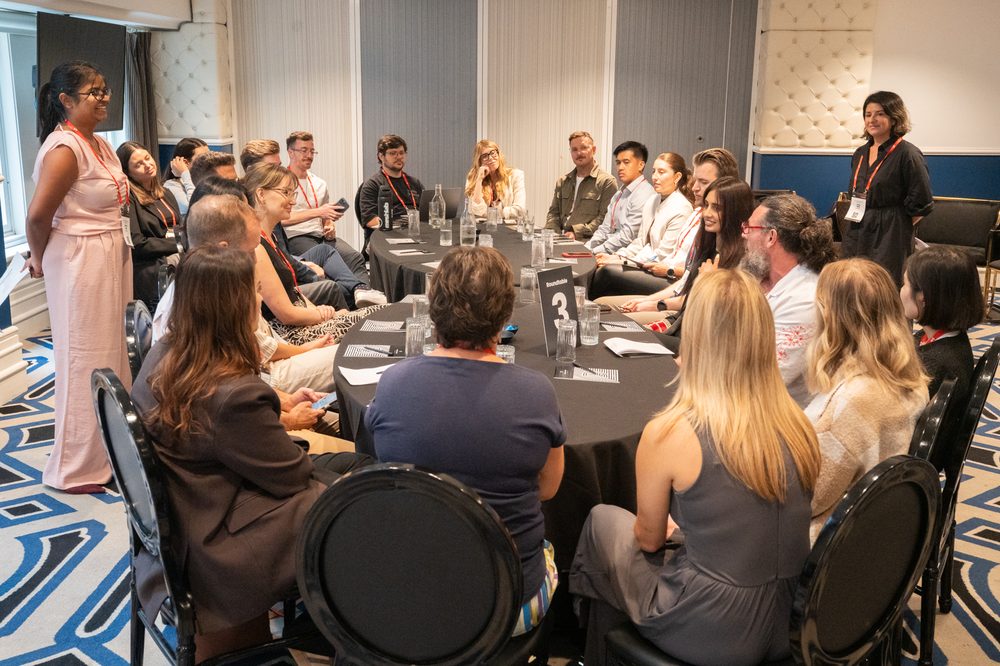
Roundtable Discussions
Small groups, real problems, peers in your seat. Ten to twelve practitioners around one table, chaired by someone who does the job, working through something the whole room is dealing with.
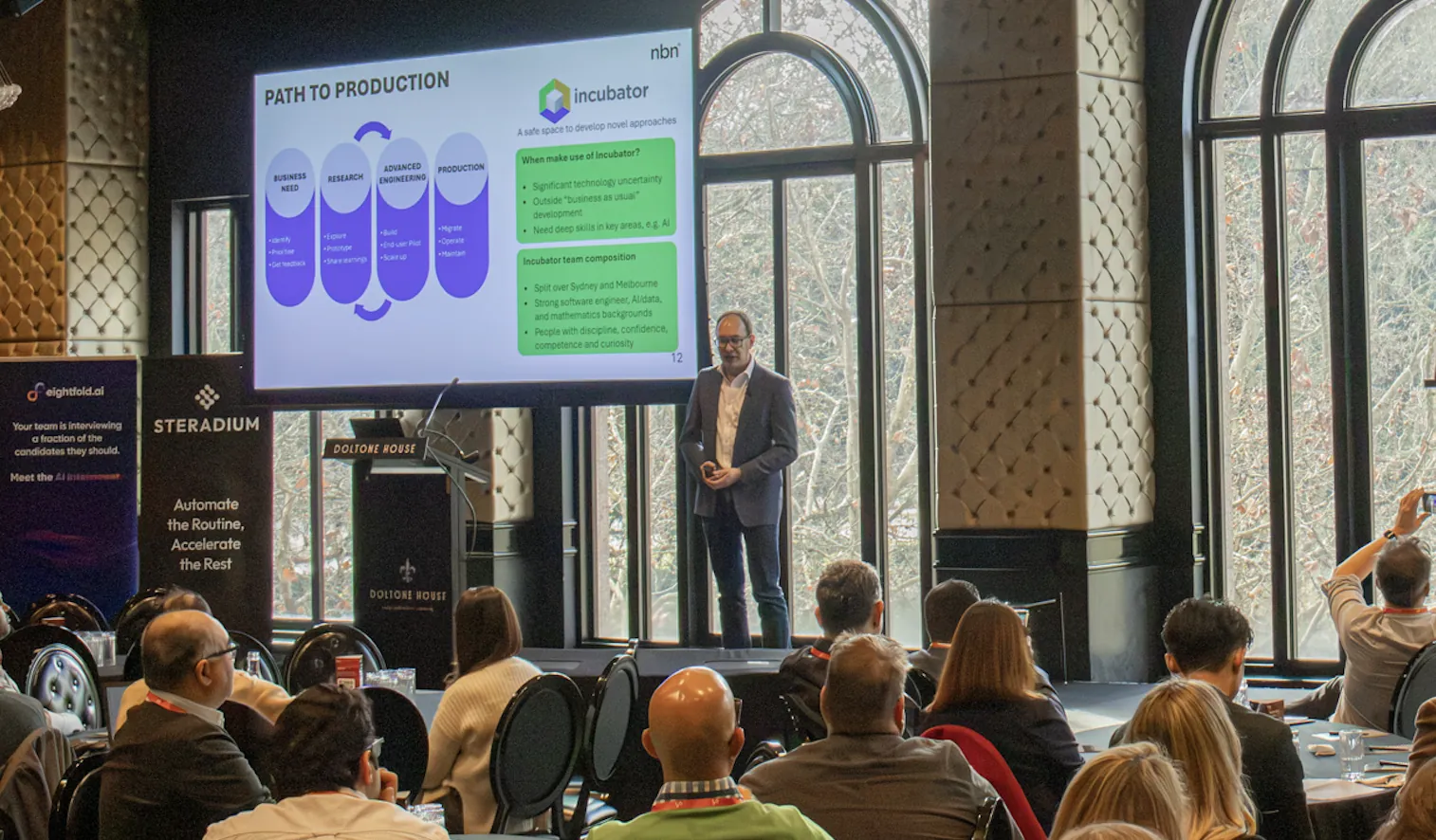
Keynote Presentations
Practitioners sharing what worked, not vendor theory. What they built, what it cost, what broke, and what they would do differently.
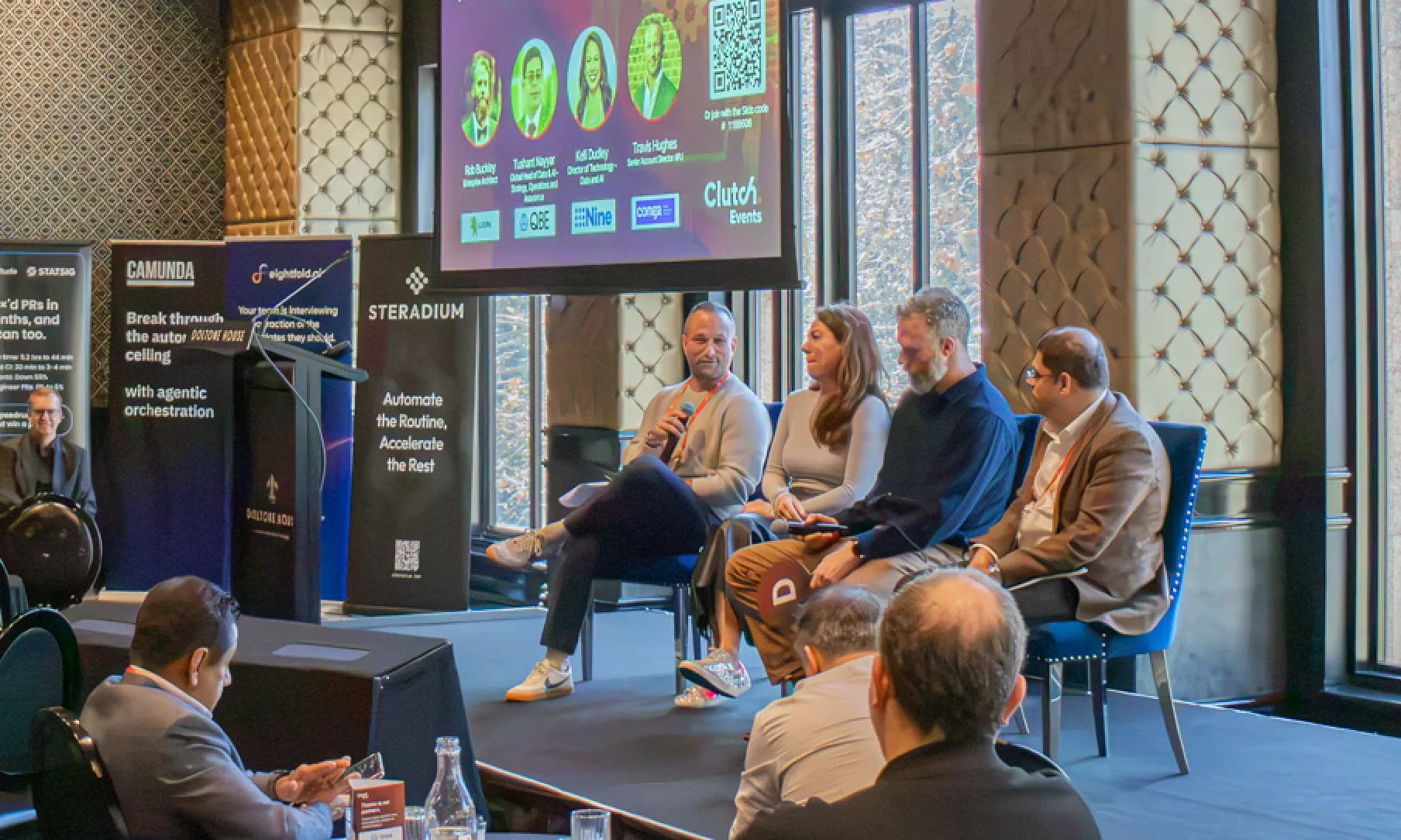
Panel Discussions
Live debate. Vote and contribute from your phone. Three or four people who genuinely disagree, a chair willing to push, and the room's answers on screen as it runs.
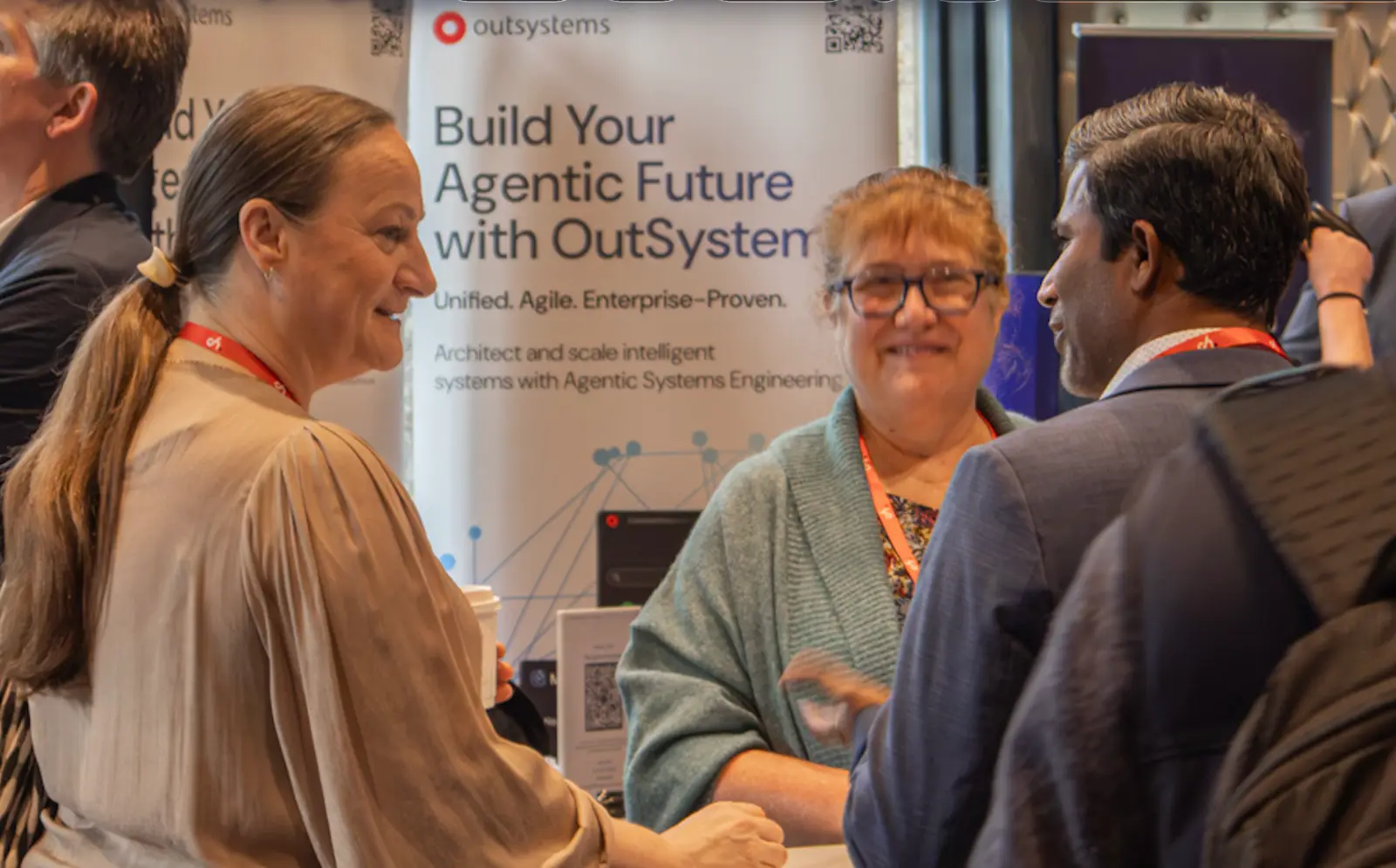
1-2-1 Meetings
Matched to your challenges. Short meetings with solution providers based on what you flag at registration, scheduled around the rest of your day at the summit.
A day designed for momentum.
2 keynotes · 3 panels · 4 "How I Solved" case studies · 1 live audience simulation · roundtables · drinks.
Built to Scale From Day One: Why Teams Can't Afford to Retrofit Infrastructure Anymore
In a market where foundation model releases and funding rounds move faster than most engineering roadmaps, this opening keynote examines why AI teams increasingly can't afford the "build fast, harden later" approach that worked in earlier tech cycles, and sets the tone for a day focused on building production-grade infrastructure at startup speed.
- How the compressed timeline between prototype, funding round, and real user traffic is leaving teams less runway than previous software cycles to retrofit infrastructure after initial success.
- Distinguishing between genuinely necessary early architectural decisions and premature optimisation that slows a team down without reducing real risk.
- What infrastructure investments AI teams are making early that are paying off, and where "moving fast" has quietly become the excuse for skipping work that will cost far more later.
Audience Activity
A hands-on, interactive session working through a real production AI scenario as a room. Details announced soon.
Peer Roundtables
Small-group, discussion-based sessions where you'll work through real AI engineering and infrastructure challenges with peers in similar roles. Roundtable topics will be announced soon.
Think Tank: What Makes a Great AI Infrastructure Engineer, and Where Do You Find Them?
The demand for engineers who can build and operate production AI infrastructure now outpaces supply. This interactive session brings together engineering leaders to discuss what skills genuinely differentiate strong AI infrastructure talent, and how teams are building capability when the ideal hire rarely exists on the open market.
- What engineering leaders are finding actually correlates with success building and operating production AI infrastructure, versus credentials that look impressive on paper.
- How teams are weighing the cost and time of upskilling existing engineers against the increasingly expensive and competitive market for experienced AI infrastructure hires.
- Emerging patterns in how leading organisations are organising the roles and responsibilities across ML platform, infrastructure, and application engineering functions.
Registration Opens & Networking Breakfast
Beat the rush and join us early for complimentary barista-made coffee and breakfast.
Welcome & Opening Remarks
Built to Scale From Day One: Why Teams Can't Afford to Retrofit Infrastructure Anymore
In a market where foundation model releases and funding rounds move faster than most engineering roadmaps, this opening keynote examines why AI teams increasingly can't afford the "build fast, harden later" approach that worked in earlier tech cycles, and sets the tone for a day focused on building production-grade infrastructure at startup speed.
- How the compressed timeline between prototype, funding round, and real user traffic is leaving teams less runway than previous software cycles to retrofit infrastructure after initial success.
- Distinguishing between genuinely necessary early architectural decisions and premature optimisation that slows a team down without reducing real risk.
- What infrastructure investments AI teams are making early that are paying off, and where "moving fast" has quietly become the excuse for skipping work that will cost far more later.
From Research Paper to Production System
With unmatched proximity to frontier AI research, engineering teams face a unique version of the production gap: promising research techniques arrive faster than anywhere else, but the discipline required to turn a paper's findings into a reliable production system hasn't kept pace with the excitement.
- Common patterns where techniques that looked compelling in a paper or benchmark broke down under the messier conditions of real production traffic and data.
- How some teams are building internal evaluation rigour to separate genuinely production-ready techniques from impressive demos, resisting pressure to ship the newest approach simply because it's newest.
- Concrete engineering lessons from teams who've successfully taken a research technique from paper to reliable production deployment, and what got cut or hardened along the way.
Panel: Build, Buy, or Fine-Tune: Making the Model Selection Decision Stick for More Than a Quarter
With new frontier and open-weight models shipping faster than most engineering teams can evaluate them, this panel brings together AI and ML platform leaders to discuss how they're making model selection and infrastructure decisions durable enough to survive the next model release cycle, rather than re-architecting every few months.
- How the constant temptation to swap in the latest, most capable model is creating hidden engineering and evaluation costs that rarely get accounted for in the decision.
- Practical architectural patterns that let teams change underlying models without rewriting downstream application logic every time.
- Under what genuine technical and cost conditions teams are finding fine-tuning smaller models still outperforms simply throwing a larger frontier model at the problem.
How I Solved… Multi-Model Fallback for a Consumer AI App After a Provider Outage
After a major foundation model provider outage left a consumer AI app completely unusable for six hours during peak traffic, one startup's infrastructure lead rebuilt the system around genuine multi-model fallback, without doubling engineering overhead or degrading the product experience during normal operation.
- How the team discovered that fallback logic they assumed existed was largely superficial, with core product functionality entirely dependent on one provider's availability.
- The specific architectural approach used to gracefully degrade functionality during a provider outage rather than building and maintaining a fully duplicated experience across models.
- How the team built regular failover drills into their engineering practice, rather than only discovering gaps when the next real outage hit.
Morning Tea & Networking
Audience Activity
A hands-on, interactive session working through a real production AI scenario as a room. Details announced soon.
How I Solved… Scaling an AI Coding Assistant Without Rebuilding From Scratch
Facing explosive user growth that threatened to overwhelm infrastructure built for an early-access cohort, one developer tools startup's platform lead scaled their AI coding assistant through targeted architectural changes rather than the ground-up rebuild the team initially assumed would be necessary.
- How the team used load testing and bottleneck analysis to isolate the specific components that would break at scale, avoiding a costly and unnecessary full rewrite.
- The specific caching, batching, and model-routing changes made to keep unit economics viable as usage scaled far faster than the original cost model anticipated.
- How the team balanced the urgency of the scaling work against the risk of shipping degraded product quality under pressure.
How I Built an Internal Model Evaluation Pipeline That Stopped Us From Shipping a Regression
After silently shipping a model update that degraded output quality for weeks before anyone noticed, one autonomous systems company's ML platform lead built a continuous evaluation pipeline that caught quality regressions before they reached production.
- How the team traced the gap back to relying entirely on manual spot-checks and user complaints rather than systematic, continuous evaluation.
- The specific evaluation checkpoints introduced before any model update could reach production, catching quality issues that manual review had missed.
- How the platform lead made the case internally that adding evaluation gates, despite slowing release velocity slightly, was a net win given the cost of the regression that had gone undetected.
Panel: Compliance as Code
Financial services, healthcare, and other regulated industries are facing increasingly specific requirements around AI system auditability and explainability. This panel explores how engineering teams are building compliance directly into system architecture rather than bolting it on after the fact.
- Concrete examples of the evidence and documentation regulators expect when reviewing AI systems used in regulated contexts.
- Technical patterns for capturing decision provenance, model versioning, and prompt history in a way that satisfies compliance review without crippling system performance.
- Honest comparison of the effort and technical debt incurred by teams who built compliance requirements in from day one versus those who tried to add them after a system was already in production.
Peer Roundtables
Small-group, discussion-based sessions where you'll work through real AI engineering and infrastructure challenges with peers in similar roles. Roundtable topics will be announced soon.
Lunch & Networking
QuickFire Quiz: Test Your Knowledge Against Your Peers
Put your knowledge to the test in this fast-paced quiz covering real-world trivia, key concepts, and emerging trends. Compete for bragging rights — and a voucher — as the top scorer takes the crown.
How I Solved… Real-Time AI Content Moderation
Facing exponential growth in user-generated content and mounting pressure to catch harmful content faster, one consumer social platform's infrastructure leader rebuilt their moderation pipeline to operate at real-time scale without the cost or latency blowing out as volume grew.
- How the team recognised that simply adding more compute to their existing moderation architecture would make costs untenable well before reaching their growth targets.
- The specific routing architecture built to apply lightweight, fast filtering to low-risk content while reserving deeper, more expensive model review for genuinely ambiguous or high-risk cases.
- How the team validated that the tiered approach didn't sacrifice moderation quality even as it cut the average processing cost per piece of content.
The Frontier Model Dependency Problem: Building Product on a Foundation That Changes Weekly
Foundation model providers are shipping new capabilities and deprecating old ones at a pace no other software dependency has ever moved at. This keynote examines how product and infrastructure teams are building resilient systems on top of a foundation they don't control and can't predict.
- How the pace and unpredictability of frontier model changes differs from any prior software dependency relationship, and why existing vendor management practices don't fully transfer.
- Practical architectural patterns teams are using to detect and absorb sudden shifts in model behaviour, pricing, or availability without a production outage.
- Real experience from teams who've built multi-model fallback strategies, and what that resilience has actually cost them in complexity and performance.
Think Tank: What Makes a Great AI Infrastructure Engineer, and Where Do You Find Them?
The demand for engineers who can build and operate production AI infrastructure now outpaces supply. This interactive session brings together engineering leaders to discuss what skills genuinely differentiate strong AI infrastructure talent, and how teams are building capability when the ideal hire rarely exists on the open market.
- What engineering leaders are finding actually correlates with success building and operating production AI infrastructure, versus credentials that look impressive on paper.
- How teams are weighing the cost and time of upskilling existing engineers against the increasingly expensive and competitive market for experienced AI infrastructure hires.
- Emerging patterns in how leading organisations are organising the roles and responsibilities across ML platform, infrastructure, and application engineering functions.
Closing Remarks & Prize Draw
Networking Drinks Hour
Unwind with your peers for a couple of drinks on us!
Event Closed
Registration Opens & Networking Breakfast
Beat the rush and join us early for complimentary barista-made coffee and breakfast.
Welcome & Opening Remarks
Built to Scale From Day One: Why Teams Can't Afford to Retrofit Infrastructure Anymore
In a market where foundation model releases and funding rounds move faster than most engineering roadmaps, this opening keynote examines why AI teams increasingly can't afford the "build fast, harden later" approach that worked in earlier tech cycles, and sets the tone for a day focused on building production-grade infrastructure at startup speed.
- How the compressed timeline between prototype, funding round, and real user traffic is leaving teams less runway than previous software cycles to retrofit infrastructure after initial success.
- Distinguishing between genuinely necessary early architectural decisions and premature optimisation that slows a team down without reducing real risk.
- What infrastructure investments AI teams are making early that are paying off, and where "moving fast" has quietly become the excuse for skipping work that will cost far more later.
From Research Paper to Production System
With unmatched proximity to frontier AI research, engineering teams face a unique version of the production gap: promising research techniques arrive faster than anywhere else, but the discipline required to turn a paper's findings into a reliable production system hasn't kept pace with the excitement.
- Common patterns where techniques that looked compelling in a paper or benchmark broke down under the messier conditions of real production traffic and data.
- How some teams are building internal evaluation rigour to separate genuinely production-ready techniques from impressive demos, resisting pressure to ship the newest approach simply because it's newest.
- Concrete engineering lessons from teams who've successfully taken a research technique from paper to reliable production deployment, and what got cut or hardened along the way.
Panel: Build, Buy, or Fine-Tune: Making the Model Selection Decision Stick for More Than a Quarter
With new frontier and open-weight models shipping faster than most engineering teams can evaluate them, this panel brings together AI and ML platform leaders to discuss how they're making model selection and infrastructure decisions durable enough to survive the next model release cycle, rather than re-architecting every few months.
- How the constant temptation to swap in the latest, most capable model is creating hidden engineering and evaluation costs that rarely get accounted for in the decision.
- Practical architectural patterns that let teams change underlying models without rewriting downstream application logic every time.
- Under what genuine technical and cost conditions teams are finding fine-tuning smaller models still outperforms simply throwing a larger frontier model at the problem.
How I Solved… Multi-Model Fallback for a Consumer AI App After a Provider Outage
After a major foundation model provider outage left a consumer AI app completely unusable for six hours during peak traffic, one startup's infrastructure lead rebuilt the system around genuine multi-model fallback, without doubling engineering overhead or degrading the product experience during normal operation.
- How the team discovered that fallback logic they assumed existed was largely superficial, with core product functionality entirely dependent on one provider's availability.
- The specific architectural approach used to gracefully degrade functionality during a provider outage rather than building and maintaining a fully duplicated experience across models.
- How the team built regular failover drills into their engineering practice, rather than only discovering gaps when the next real outage hit.
Morning Tea & Networking
Audience Activity
A hands-on, interactive session working through a real production AI scenario as a room. Details announced soon.
How I Solved… Scaling an AI Coding Assistant Without Rebuilding From Scratch
Facing explosive user growth that threatened to overwhelm infrastructure built for an early-access cohort, one developer tools startup's platform lead scaled their AI coding assistant through targeted architectural changes rather than the ground-up rebuild the team initially assumed would be necessary.
- How the team used load testing and bottleneck analysis to isolate the specific components that would break at scale, avoiding a costly and unnecessary full rewrite.
- The specific caching, batching, and model-routing changes made to keep unit economics viable as usage scaled far faster than the original cost model anticipated.
- How the team balanced the urgency of the scaling work against the risk of shipping degraded product quality under pressure.
How I Built an Internal Model Evaluation Pipeline That Stopped Us From Shipping a Regression
After silently shipping a model update that degraded output quality for weeks before anyone noticed, one autonomous systems company's ML platform lead built a continuous evaluation pipeline that caught quality regressions before they reached production.
- How the team traced the gap back to relying entirely on manual spot-checks and user complaints rather than systematic, continuous evaluation.
- The specific evaluation checkpoints introduced before any model update could reach production, catching quality issues that manual review had missed.
- How the platform lead made the case internally that adding evaluation gates, despite slowing release velocity slightly, was a net win given the cost of the regression that had gone undetected.
Panel: Compliance as Code
Financial services, healthcare, and other regulated industries are facing increasingly specific requirements around AI system auditability and explainability. This panel explores how engineering teams are building compliance directly into system architecture rather than bolting it on after the fact.
- Concrete examples of the evidence and documentation regulators expect when reviewing AI systems used in regulated contexts.
- Technical patterns for capturing decision provenance, model versioning, and prompt history in a way that satisfies compliance review without crippling system performance.
- Honest comparison of the effort and technical debt incurred by teams who built compliance requirements in from day one versus those who tried to add them after a system was already in production.
Peer Roundtables
Small-group, discussion-based sessions where you'll work through real AI engineering and infrastructure challenges with peers in similar roles. Roundtable topics will be announced soon.
Lunch & Networking
QuickFire Quiz: Test Your Knowledge Against Your Peers
Put your knowledge to the test in this fast-paced quiz covering real-world trivia, key concepts, and emerging trends. Compete for bragging rights — and a voucher — as the top scorer takes the crown.
How I Solved… Real-Time AI Content Moderation
Facing exponential growth in user-generated content and mounting pressure to catch harmful content faster, one consumer social platform's infrastructure leader rebuilt their moderation pipeline to operate at real-time scale without the cost or latency blowing out as volume grew.
- How the team recognised that simply adding more compute to their existing moderation architecture would make costs untenable well before reaching their growth targets.
- The specific routing architecture built to apply lightweight, fast filtering to low-risk content while reserving deeper, more expensive model review for genuinely ambiguous or high-risk cases.
- How the team validated that the tiered approach didn't sacrifice moderation quality even as it cut the average processing cost per piece of content.
The Frontier Model Dependency Problem: Building Product on a Foundation That Changes Weekly
Foundation model providers are shipping new capabilities and deprecating old ones at a pace no other software dependency has ever moved at. This keynote examines how product and infrastructure teams are building resilient systems on top of a foundation they don't control and can't predict.
- How the pace and unpredictability of frontier model changes differs from any prior software dependency relationship, and why existing vendor management practices don't fully transfer.
- Practical architectural patterns teams are using to detect and absorb sudden shifts in model behaviour, pricing, or availability without a production outage.
- Real experience from teams who've built multi-model fallback strategies, and what that resilience has actually cost them in complexity and performance.
Think Tank: What Makes a Great AI Infrastructure Engineer, and Where Do You Find Them?
The demand for engineers who can build and operate production AI infrastructure now outpaces supply. This interactive session brings together engineering leaders to discuss what skills genuinely differentiate strong AI infrastructure talent, and how teams are building capability when the ideal hire rarely exists on the open market.
- What engineering leaders are finding actually correlates with success building and operating production AI infrastructure, versus credentials that look impressive on paper.
- How teams are weighing the cost and time of upskilling existing engineers against the increasingly expensive and competitive market for experienced AI infrastructure hires.
- Emerging patterns in how leading organisations are organising the roles and responsibilities across ML platform, infrastructure, and application engineering functions.
Closing Remarks & Prize Draw
Networking Drinks Hour
Unwind with your peers for a couple of drinks on us!
Event Closed
Why engineering leaders return year after year.


Backed by the platforms your team actually runs on

Register in under 60 seconds.
Complimentary Full-day access to keynotes, panels & case studies
Common questions.
What do I need to bring?
Just bring yourself, your laptop or a notebook and get ready to collaborate!
Will sessions be recorded or live-streamed?
No. You'll have to be there to enjoy the sessions.
Will there be WiFi?
Yes, absolutely! Stay connected at the event with complimentary wifi - we'll share the details at the event.
Will food and drinks be provided?
Yes, morning tea, lunch, and afternoon refreshments will be provided. Please indicate any dietary requirements during registration.
Are Chatham House Rules in effect?
Absolutely! No media, recordings, or live streaming... what happens in the room, stays in the room.
What is the dress code?
Smart casual or business casual is recommended, no need for a suit and tie! Keep it comfortable.
Are there any fees to attend?
Nope! The conference is completely free for industry professionals. Contact us if you are not sure whether you qualify.
Getting there.
97 days left.
Register free today.
Be the engineering leader in the room — not the one reading the LinkedIn recap.
Contact our event team for any enquiry


