
Melbourne AI Engineering and Infrastructure Summit 2026
The 2026 Melbourne AI Engineering and Infrastructure Summit has wrapped. Missed it? Join the waitlist to be first in line when registration opens for next year.

That's a wrap on the 2026 Melbourne AI Engineering and Infrastructure Summit!
Thank you to every AI engineer, data scientist, and technology leader who joined us at Crown Melbourne — and to our speakers and partners for making it such a valuable day of honest, practitioner-led conversation.
Across the day we dug into scalable AI systems and high-performance infrastructure: deploying AI models at scale, optimising data pipelines for ML workloads, CI/CD for AI, Edge AI, ethics in AI engineering, and the cloud vs. on-prem debate.
Sorry you missed us?
We'll be back in Melbourne next year — and seats go quickly. Join the waitlist to be first to hear when registration opens for the 2027 summit.
Join the waitlist to secure your spot for next year.
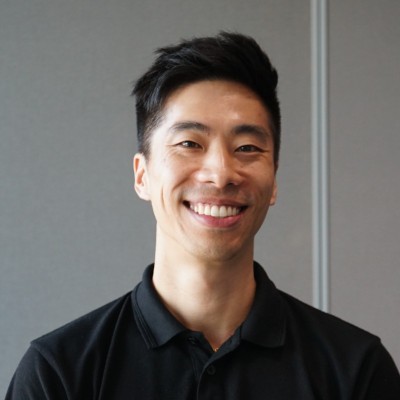
Our Speakers







.png)



.png)



.png)










.png)


.jpg)

Agenda
Beat the rush and join us early for complimentary barista-made coffee and breakfast.
AI that looks brilliant in a demo often struggles in the real world. In this keynote, I’ll share what a research engineering team learned translating promising AI prototypes into practical organisational capability, and why success depends less on model choice than on delivery discipline, platform thinking, governance, and trust.
- Why data, workflows, governance, and operating model matter more than most teams realise
- How to run fast, safe experimentation without undermining reliability or security
- What organisations need to get right before AI can deliver lasting operational value
As AI workloads move into production, infrastructure stops being a backend concern and becomes a core business driver. This keynote breaks down how AI factories unify data, compute, networking and software into a single high-utilisation platform and why utilisation, not raw capacity, now determines cost, speed and scale.
We'll Cover:
- What an AI factory actually is, and how it differs from traditional AI infrastructure stacks
- How improving fabric utilisation and GPU efficiency increases token throughput while lowering unit cost
- Why predictable scaling turns infrastructure decisions into commercial and operational advantages
As AI moves into real-world systems, responsibility must be built into the technology itself, not added later. Engineering teams are now expected to design AI that is fair, transparent, and accountable, while still delivering innovation at speed.
This panel explores how organisations are embedding ethical considerations into AI engineering, from bias mitigation and model transparency to governance and accountability.
- Identifying and reducing bias in AI systems
- Improving transparency and explainability in models
- Embedding accountability and governance into AI development
As AI agents take on more autonomous roles, the identity and access patterns built for humans and APIs no longer hold. This session draws on Auth0’s real-world experience securing agentic workflows where misconfigured permissions can have serious consequences.
We’ll Cover
- How Auth0 handles agent authentication and authorisation in real-world agentic workflows
- How to maintain full audit trails and enforce least-privilege access for autonomous systems
- Why standards-based identity makes it easier to ship AI features without security trade-offs
In this innovative session, attendees will be faced with a series of scenarios that they may face in their roles. Attendees will discuss the possible courses of action with their peers to consider the ramifications of each option before logging their own course of action.
Results will be tallied and analysed by our session facilitator and results will impact the way the group moves through the activity.
Will we collectively choose the right course of action?
As we deployed AI agents to automate accounting workflows in a highly regulated environment, we quickly learned that model-level safeguards weren’t enough. This session explores how we built a layered safety chain, spanning the user’s role, the agent, and the underlying services and data, to manage blast radius, permissions and autonomy in production. We’ll share how targeted beta rollouts and deliberate UI design helped define clear boundaries between essential human oversight and safe, scalable automation.
We faced a problem every team building production AI will recognise: LLM frameworks move fast, dependency trees are deep, and prompt injection is a real attack vector, not a theoretical one. This talk is the story of how we used Snyk to secure every layer of our internal AI applications, from open source dependency scanning and STIG-hardened containers, to a dual-model prompt injection gate red-teamed by our own security team.
You'll leave with a practical framework for securing AI services in your own organisation.
AI systems don’t fail like traditional software. They degrade, drift, and behave unpredictably, making them harder to monitor and harder to trust. Traditional observability tools weren’t designed for probabilistic systems, leaving teams without a clear way to measure reliability in production.
This panel explores how engineering teams are building observability into AI systems, from tracking model behaviour and drift to monitoring end-to-end workflows across multi-model and agent-based environments.
- What “reliability” actually means for AI systems in production
- How teams are extending observability beyond logs, metrics, and traces
- Monitoring model drift, hallucinations, and unexpected behaviour
- Observability across multi-model and agentic systems
Select a topic of discussion and engage in an interactive roundtable discussion with a group of your like-minded peers.
Put your knowledge to the test in this fast-paced quiz covering real-world trivia, key concepts, and emerging trends. Compete for bragging rights - and a travel voucher - as the top scorer takes the crown.
A technical walkthrough of eliminating backend friction with Gemini and Firebase to design, optimize, and deploy a live-sync infrastructure for a critical community fundraiser in 72 hours.
A lively session on how organisations are navigating the growing pressure on AI infrastructure. From GPU shortages and rising cloud costs to sustainability targets and performance demands, engineering leaders are being forced to make trade-offs with no clear right answer.
This interactive think tank puts the question directly to the audience. Participants vote live on a series of real-world scenarios, explore the results together, and vote again as perspectives shift through the discussion.
- What is your biggest constraint in scaling AI today?
- Where should most AI workloads run long-term?
- If AI infrastructure costs doubled, what would you prioritise?
- Where do you see the biggest hidden cost in AI infrastructure?
- What will matter most in AI infrastructure decisions over the next 3 years?
Unwind with your peers for a couple of drinks on us!
Our event sponsors

.png)


.png)
Past Speaker Highlights






Past Sponsors


Event Location
Crown Melbourne

About Clutch
Hyper-Niche Content
Our conferences are specific to niche sub-sets of the technology industry, drilling down into the biggest issues, challenges and market trends facing tomorrow's leaders.
Collaboration first
Enjoy ample networking opportunities, roundtable discussions, interactive group sessions and real-world case-studies that arm attendees with actionable insights.
Dynamic & Bite-Size formats
No more death-by-PowerPoint. Our events are short, sharp and collaborative with a variety of session formats and a 3/4 day commitment to ensure returns on your time investment.
Get In Touch
Contact our event team for any enquiry

Danny Perry
For sponsorship opportunities.

Lili Munar
For guest and attendee enquiries.

Steph Tolmie
For speaking opportunities & content enquiries.

Taylor Stanyon
For event-related enquiries.