
New York Identity and Access Management Summit 2026
Join us for the New York edition of the IAM Summit to explore the latest in security and compliance through expert-led sessions and interactive discussions. Connect with peers, address real-world IAM challenges, and gain practical insights to strengthen your organization's digital identity strategy.

Identity threats are evolving faster than most teams can control.
AI agents, machine identities, service accounts, privileged access, and fragmented authentication journeys are changing how identity needs to operate — and it's all often happening faster than traditional IAM models can keep up.
As identity and security leaders, you're being asked to improve access, reduce risk, support the business, and prove control all at the same time.
The New York Identity, Authentication & Access Management Summit is a closed-door, practitioner-focused event designed to bring together IAM, security, risk, and technology leaders working through these challenges every day — sharing what's working, what's failing, and what needs to change next.
This is a can't-miss opportunity to benchmark your identity and access strategies with senior leaders across the New York technology and security community.
This is not another conference; it's a working session with people facing the same pressures you are.
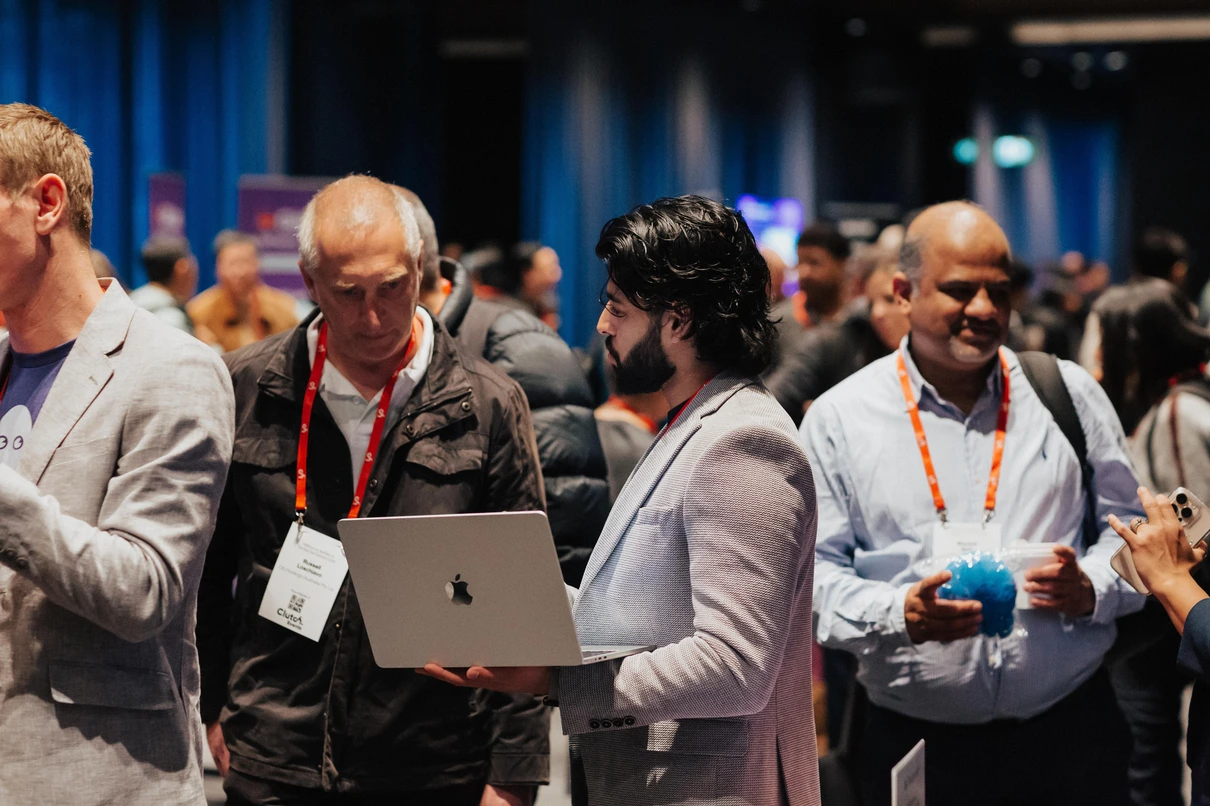
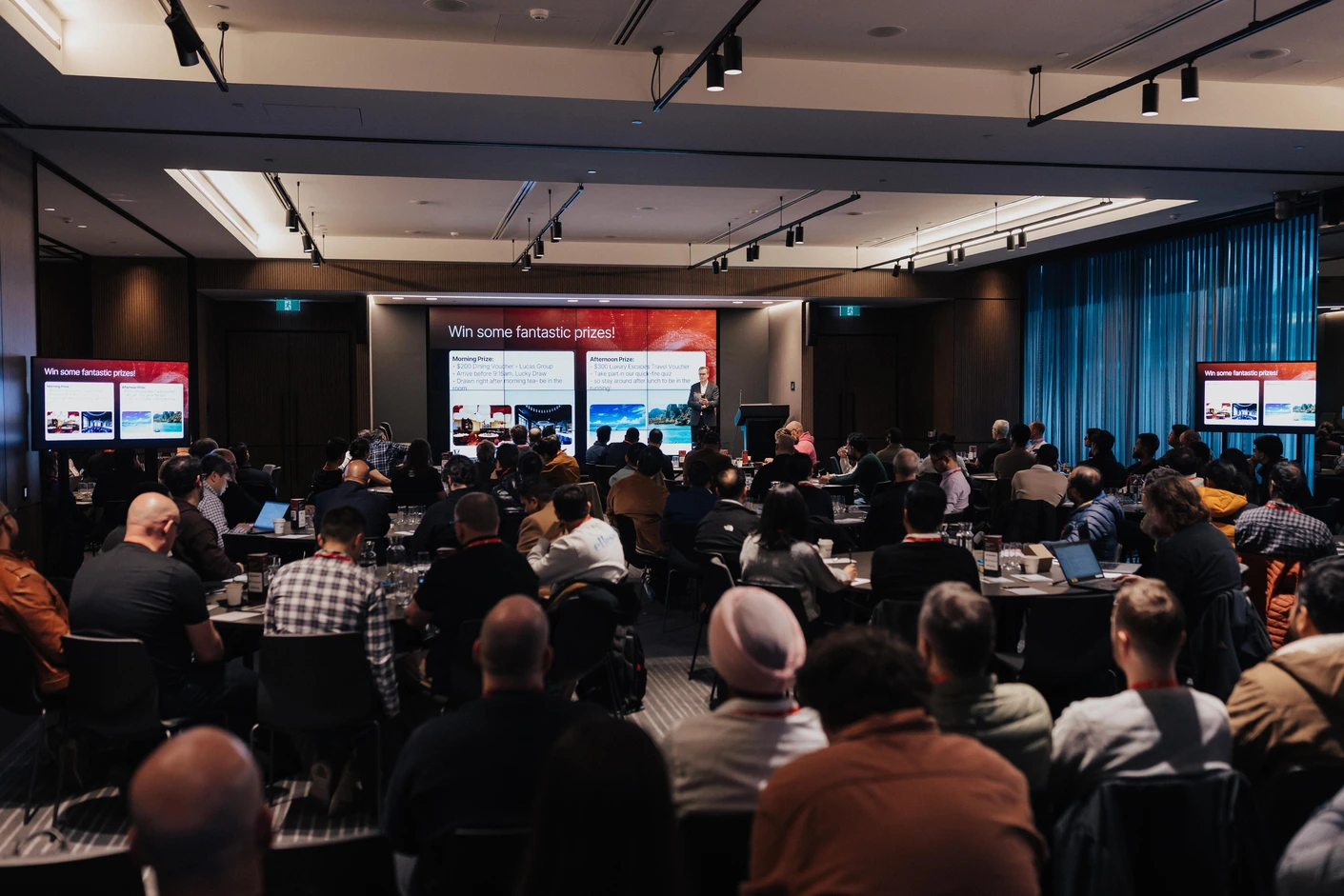
This is a deliberately small, highly interactive summit designed for people who live and breathe identity, authentication, and access management.
Here's what that looks like in practice:
- Practitioner keynotes — real-world lessons, not vendor theory
- Peer roundtables — small-group problem-solving with people in similar roles
- Live simulations — tackling real identity and access scenarios together
- Interactive panels — contribute your views live using your phone
- Structured networking — conversations that actually lead somewhere
- Optional one-to-one meetings — matched to your challenges
- Knowledge challenges and prizes — test your thinking against your peers
It's an event with collaboration and participation at its heart, designed to give practical solutions to the challenges you face and new people to connect with later.
Free-to-attend. No vendor pitching.
Our Speakers
























.png)








Agenda
Beat the rush and join us early for complimentary barista-made coffee and breakfast.
Non-human identities now play a central role across cloud platforms, CI/CD pipelines, APIs, and AI-driven workflows. As these identities scale, many teams are finding that practices designed for human access need to be adapted to support automation, autonomy, and rapid change.
This keynote explores how non-human identity usage is evolving in real environments, where traditional IAM approaches need refinement, and how organisations are adjusting ownership and lifecycle models to maintain visibility and control while supporting innovation.
We’ll cover:
- How service accounts, APIs, and AI agents are typically introduced and managed across modern platforms
- Where teams are encountering challenges with ownership, lifecycle management, and visibility as these identities grow
- Practical approaches organisations are using today to improve governance of non-human identities without slowing delivery
AI agents are moving faster than your identity stack. While traditional Identity Providers (IdPs) lock down connected applications, they are completely blind to the ~40% of enterprise apps that don’t support enterprise standards like SAML. If a hijacked agent logs into a disconnected app, your IdP sees absolutely nothing: no logs, no alerts, and no control. This session exposes the reality of “poisoned workflows” and delivers a proven strategy to secure the apps your identity stack is missing.
What We Will Cover
- The App Blind Spot: Why an average of 80+ disconnected apps sit outside your identity control plane, serving as the perfect playground for compromised AI agents.
- Anatomy of a Poisoned Workflow: How malicious inputs manipulate AI agents into executing silent state changes and data exports that bypass your IdP entirely.
- The 90-Day Fix: A rapid 30/60/90-day blueprint to discover vulnerabilities, define a new access model, and extend your identity investments to every single app.
Regulators are no longer treating identity as a background control. Across financial services and regulated industries, access decisions, identity logs, and privileged activity are now being examined directly during investigations, audits, and post-incident reviews.
This panel brings together security, identity, and risk leaders to unpack how US regulatory expectations around identity have shifted, what scrutiny actually looks like in practice, and how teams are preparing for enforcement without turning IAM into a compliance-only function.
We’ll discuss:
- How identity controls are being examined under NYDFS cybersecurity rules, SEC cyber disclosure requirements, and evolving state privacy laws
- What regulators look for after an incident including access logs, privileged activity, review evidence, and decision traceability
- Why baseline controls like MFA are now assumed, and what “defensible access decisions” really mean in regulatory conversations
Many organizations are still managing multiple identity platforms across legacy applications, cloud services, acquisitions, and different business units. Over time, these environments become harder to maintain, more difficult to secure, and increasingly expensive to operate. At the same time, consolidation projects introduce operational risk, especially when authentication services support thousands of users and critical systems.
This session explores how fragmented identity environments can be simplified in practice, where teams commonly encounter migration and coexistence challenges, and the practical approaches being used to modernize identity architecture while maintaining continuity for users and applications. Rather than forcing a rip-and-replace of major systems, many teams are looking for practical ways to consolidate identity gradually and seamlessly.
We’ll cover:
- How teams assess fragmented identity environments and decide what to consolidate, retire, or leave in coexistence
- Where organizations encounter the biggest operational and political challenges during identity migration projects
- Practical approaches teams are using to modernize legacy identity systems while minimizing disruption for users and production environments
Seventy percent of acquisitions fail to deliver projected value. Research consistently identifies identity integration as a primary reason however rarely surfaces where and when the damage actually occurs. It occurs before Day One, in the architecture decisions that were never made while the lawyers were still negotiating.
Drawing on independent practitioner experience across large-scale regulated environments where authentication failure is not a recoverable UX event, it is a patient safety and care continuity problem. This session presents three publicly documented failure patterns and the architectural decisions that would have changed their outcomes.
- Absorption Assessment: Why identity platform capacity must be audited before the LOI, not after close.
- Resolving Identity Debt: How temporary bridges become permanent entry points for the next major incident.
- The Agentic Risk: Why Non-Human Identity (NHI) governance is now a pre-close M&A risk, not a post-close IT task.
- Resilient Federation: Implementing trust models that preserve operational continuity without forcing premature consolidation.
AI agents are beginning to take real action approving transactions, accessing sensitive data, updating records, and interacting with enterprise systems. Securing these autonomous identities requires more than authentication; it demands continuous authorization, least-privilege access, and runtime enforcement.
In this hands-on lab, you'll secure a working AI refund agent using IBM Verify and HashiCorp Vault. Watch real-time authorization decisions, just-in-time access, and automated credential management work together to enforce least privilege and continuous trust. You'll also see how security events can trigger rapid response across connected systems and how modern token protections help prevent misuse of agent credentials.
In this session, we’ll showcase:
- Real-time logs and dashboards demonstrating how identity, authorization, secrets management, and continuous trust work together to secure agentic AI.
- Live demonstrations of OAuth 2.0 Token Exchange, Rich Authorization Requests, step-up authentication, and just-in-time credentials in action.
- Practical reference architecture and implementation patterns for building AI agents that are secure, auditable, and ready for production.
Identity and security decisions increasingly influence how users experience products, platforms, and internal tools. Step-up authentication, session expiry, device trust, and risk-based access now sit inside critical journeys, often requiring trade-offs between protection, usability, and performance.
This panel brings together identity, security, and product leaders to discuss how these trade-offs show up in practice, how teams identify unintended impacts over time, and how ownership is evolving as identity becomes more closely tied to user experience and business outcomes.
We’ll explore:
- How authentication and access decisions affect conversion, engagement, and productivity over time
- Where well-intentioned security changes created unexpected friction for users
- How teams collaborate across security, identity, and product to manage trade-offs
Delegates will chose from a list of pertinent peer-to-peer discussion topics focussing on evolving and emerging trends, techniques and technologies.
Put your knowledge to the test in this fast-paced quiz covering real-world identity trivia, key concepts, and emerging trends. Compete for bragging rights—and a travel voucher—as the top scorer takes the crown.
AI systems are starting to act autonomously on behalf of users, calling other services, triggering actions, and making decisions across multiple systems. As this happens, many organisations are discovering that identity context, ownership, and accountability are difficult to maintain once requests move beyond a single application or model.This session explores how identity and access control change when actions are taken by chains of AI agents rather than humans. Drawing on real-world experience, it examines where existing IAM approaches fall short and how teams are adapting authentication, delegation, and auditing models to retain control as autonomy increases.We’ll cover:
- How user intent and accountability can be preserved as actions pass through multiple AI agents
- Why static credentials and traditional service accounts struggle in agent-driven workflows
- How teams are reducing the risk of unintended or unauthorised actions in autonomous systems
This session introduces the Identity Uncertainty Principle, an original concept that reframes how we think about identity and access in the era of AI agents.
As AI agents become more autonomous, traditional models of identity built on static credentials and point-in-time authentication begin to break down. I’ll walk through:
- Why identity certainty decays as agent autonomy increases
- The limitations of static authentication and authorization models in agentic systems
- The shift toward continuous behavioral attestation and dynamic trust
- Implications for Zero Trust, non-human identity governance, and privileged access
- Practical approaches IAM leaders can take to secure autonomous systems at scale
Identity systems are designed to provide control, accountability, and traceability. But when long-standing service accounts, APIs, or machine identities begin behaving in unexpected ways, those assumptions can be tested quickly. Ownership becomes unclear, privilege boundaries blur, and incident response and compliance timelines start to collide.
This interactive Think Tank puts the room into a realistic identity incident. Participants vote live on a series of real-world decisions, explore the implications together, and revisit their choices as new information emerges and trade-offs become clearer.
We’ll Cover:
- How teams respond in the first moments of an identity incident involving privileged non-human access
- The decision trade-offs between containment, investigation, and business disruption
- Where identity lifecycle and governance gaps typically surface under pressure
Attending Companies


.svg.png)




















Who Attends?
A deliberately small, closed-door room of senior IAM, security, risk, and technology leaders from New York's largest and most innovative organisations: Capital One, TikTok USDS, Verizon, Morgan Stanley, Bank of America, American Express, Wells Fargo, Nomura, Guardian Life, Genuine Parts Company, and more.


Attendee Testimonials

Session Highlights

Managing Non-Human Identity at Scale
Dr. Nader Nassar, Director Engineering, Cybersecurity & IAM, Capital One Keynote: What's changed and what still works as service accounts, APIs, and AI agents scale across cloud, CI/CD, and automated workflows, and how to keep ownership, lifecycle, and visibility under control without slowing delivery.

Agentic Identity: Keeping Control as AI Acts on Our Behalf
Priyesh Bansal, Identity & Security Product Manager, Cerebras AI Keynote: How authentication, delegation, and auditing break down when chains of AI agents, not humans, take action, and how teams preserve user intent and accountability across autonomous systems.

The Identity Uncertainty Principle
Rohit Agnihotri, FSI Industry IAM Leader, The Identity Navigator Why identity certainty decays as agent autonomy increases and the shift from static credentials and point-in-time authentication toward continuous behavioral attestation and dynamic trust.
Our event sponsors











Past Speaker Highlights
Past Sponsors


%20Full%20Logo%20-%201920x550(2).png)







Event Location
Ease 1345

About Clutch
Hyper-Niche Content
Our conferences are specific to niche sub-sets of the technology industry, drilling down into the biggest issues, challenges and market trends facing tomorrow's leaders.
Collaboration first
Enjoy ample networking opportunities, roundtable discussions, interactive group sessions and real-world case-studies that arm attendees with actionable insights.
Dynamic & Bite-Size formats
No more death-by-PowerPoint. Our events are short, sharp and collaborative with a variety of session formats and a 3/4 day commitment to ensure returns on your time investment.
Get In Touch
Contact our event team for any enquiry

Danny Perry
For sponsorship opportunities.

Lili Munar
For guest and attendee enquiries.

Steph Tolmie
For speaking opportunities & content enquiries.

Taylor Stanyon
For event-related enquiries.