
San Francisco AI Engineering & Infrastructure Summit 2026
150+ AI engineers, ML platform leaders, and infrastructure leaders. One room, one day. A fast-moving, peer-led summit about the engineering behind production AI: scaling systems that hold up under real traffic, controlling inference costs, and running agents reliably in production. Free to attend. Register now.

Getting AI to work in a demo is easy. Keeping it reliable in production is where the real engineering begins.
The models and tooling change faster than most teams can re-architect around them. Agents are starting to take real action. And the distance between a prototype that works and a system you would confidently put in front of users keeps getting wider. Most infrastructure and engineering practices were not built for how quickly this is moving.
Meanwhile, you are expected to ship faster, spend less, keep everything reliable, and prove it works at scale. All at once.
The San Francisco AI Engineering & Infrastructure Summit is a closed-door, practitioner-led event for the people doing this work every day. No theory and no sales decks. Just senior engineers and technology leaders comparing notes on what is working, what is quietly breaking, and what they would do differently if they started again tomorrow.
If you want an honest read on how your infrastructure and engineering decisions compare with leading teams across the Bay Area, this is the room to be in.
This is not a conference you sit through. It is a working session with people wrestling with the same problems you are.
We keep it deliberately small and hands-on because the value is in the conversations, not the slides.
Here is how the day actually runs:
- Practitioner keynotes from people who have built and operated production AI systems
- Peer roundtables where you solve real problems in small groups with people facing similar challenges
- Live scenarios the whole room works through together
- Interactive panels you help shape live from your phone
- Structured networking designed to lead somewhere
- Optional one-to-one meetings matched to the challenges you are working through
- Knowledge challenges and prizes to put your thinking to the test
Free to attend. No vendor pitching. Just a genuinely useful day with people who understand the work.
Register now to secure your seat.
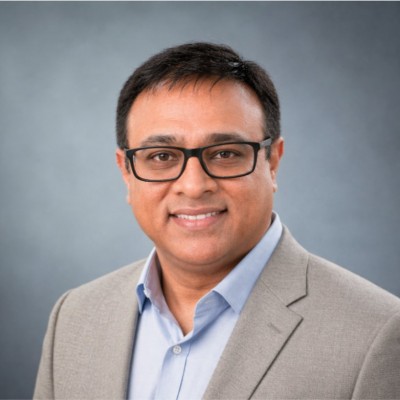
Our Speakers



.png)





.png)
















.png)


Agenda
Beat the rush and join us early for complimentary barista-made coffee and breakfast.
The teams pulling ahead in AI are not just using better models. They are making different infrastructure decisions underneath them, and the gap between AI-native and AI-retrofit is widening fast.
This keynote walks through what AI-native infrastructure actually looks like in 2026, where the patterns are converging, and what the rest of the industry will have to confront.
We'll cover:
- The infrastructure choices AI-native teams make differently from day one
- Where established cloud-native patterns break under AI workloads
- What this means for teams trying to retrofit existing infrastructure
Most AI prototypes work. Most AI systems serving real users are harder than they look. The gap between the two is where most of the engineering work that matters actually gets done.
This panel brings together engineering leaders who have taken AI from prototype to production at scale, to discuss what broke and what they had to retrofit under pressure.
We'll cover:
- The architectural decisions that turned out to matter once real traffic arrived
- What teams underinvested in early and paid for later
- How the engineering bar for AI is different from traditional software
A live scenario where a major model provider announces an EOL on the model powering your most important product feature. Attendees vote through their phones on migration strategy, capability regression, and engineering trade-offs, with the scenario evolving as the room decides.
A real-world version of a dependency risk problem most senior engineering teams now face and few discuss openly.
Agent demos work because the path is clean. Production workflows are messy. Tools fail, context drifts, permissions get tangled, retries duplicate actions, and the system needs to know when to stop.
This session walks through how one team designed agentic workflows that could operate safely with real users, where they drew the line on autonomy, and what broke first when the demo became a product.
We'll cover:
- Where agents were given authority to act and where humans stayed in the loop
- How tool calls, retries, state, and memory were managed under pressure
- What broke first when the workflow moved from demo to real users
Once AI systems start taking actions on behalf of users — calling tools, moving data, triggering workflows — the engineering bar shifts. Prompt injection, tool misuse, data leakage, eval failures, and silent reliability regressions all become live operational concerns, and most teams are figuring out the patterns in real time.
This panel brings together engineering leaders working on the safety, control, and reliability of production AI to discuss what is actually working and where the open problems still sit.
We'll cover:
- How teams are deciding what an AI system is allowed to do and where humans review
- What's working against prompt injection, tool abuse, and data exposure
- How reliability and observability practices are being rebuilt for systems that take action
Delegates choose from a list of peer-to-peer discussion topics covering the engineering challenges that aren't getting solved in public.
Topics include:
- Inference performance — runtime, batching, caching, quantization
- Model-layer decisions — API, fine-tuning, distillation, training
- Context engineering — retrieval quality, grounding, feedback loops
- Eval engineering — harnesses, LLM-as-judge calibration, eval-driven development
- Training infrastructure at scale — clusters, checkpointing, failure recovery
- Data engineering for AI — pipelines, synthetic data, labeling
- AI observability — what to track beyond latency and errors
- GPU and accelerator strategy — when custom silicon starts to make sense
A fast-paced quiz covering real-world AI engineering trivia, key concepts, and emerging trends. Compete for bragging rights — and a travel voucher — as the top scorer takes the crown.
As AI agents become more autonomous, the platforms and infrastructure supporting them must evolve just as quickly. Explore how organisations are building AI-native foundations that enable agents to develop, orchestrate, and optimise AI capabilities at enterprise scale.
- Build AI platforms that support autonomous agents, rapid development, and continuous improvement.
- Evolve infrastructure, data, and orchestration to enable secure, scalable agentic AI.
- Learn how AI is accelerating software development, operations, and platform engineering across the enterprise.
Most teams get an agent working in a notebook and then hit the real problem, which isn't the model at all. It's the loop around it. I'd walk through a three-boundary architecture for agentic systems (context, tool, and verification boundaries), why each one earns its place, and what tends to break when you skip them. It comes out of building a HIPAA-compliant clinical AI platform, where a wrong answer isn't a bug, it's a compliance event.
We'll cover:
- The hard part of agentic systems isn't the model, it's the loop around it.
- Three boundaries hold up in production: context, tool, and verification. Skip one and it breaks predictably.
- In regulated AI, a wrong answer isn't a bug, it's a compliance event.
The AI stack is moving fast enough that decisions being made today will look obvious or wrong in 18 months, and nobody is sure which is which. Self-hosting versus managed APIs. Hyperscalers versus dedicated AI clouds. Agent platforms versus building it yourself. Custom silicon versus established GPUs.
The audience votes live on a series of contested questions, the panel argues each result out, and the room votes again at the end to see whether anyone shifted position.
We'll cover:
- Which parts of the stack are converging and which are still genuinely contested
- Where the build-versus-buy line should sit on inference, agents, and evals
- Which bets are most likely to look wrong in 18 months and why
Unwind with your peers for a couple of drinks on us.
Our event sponsors






Past Speaker Highlights
Past Sponsors


Event Location
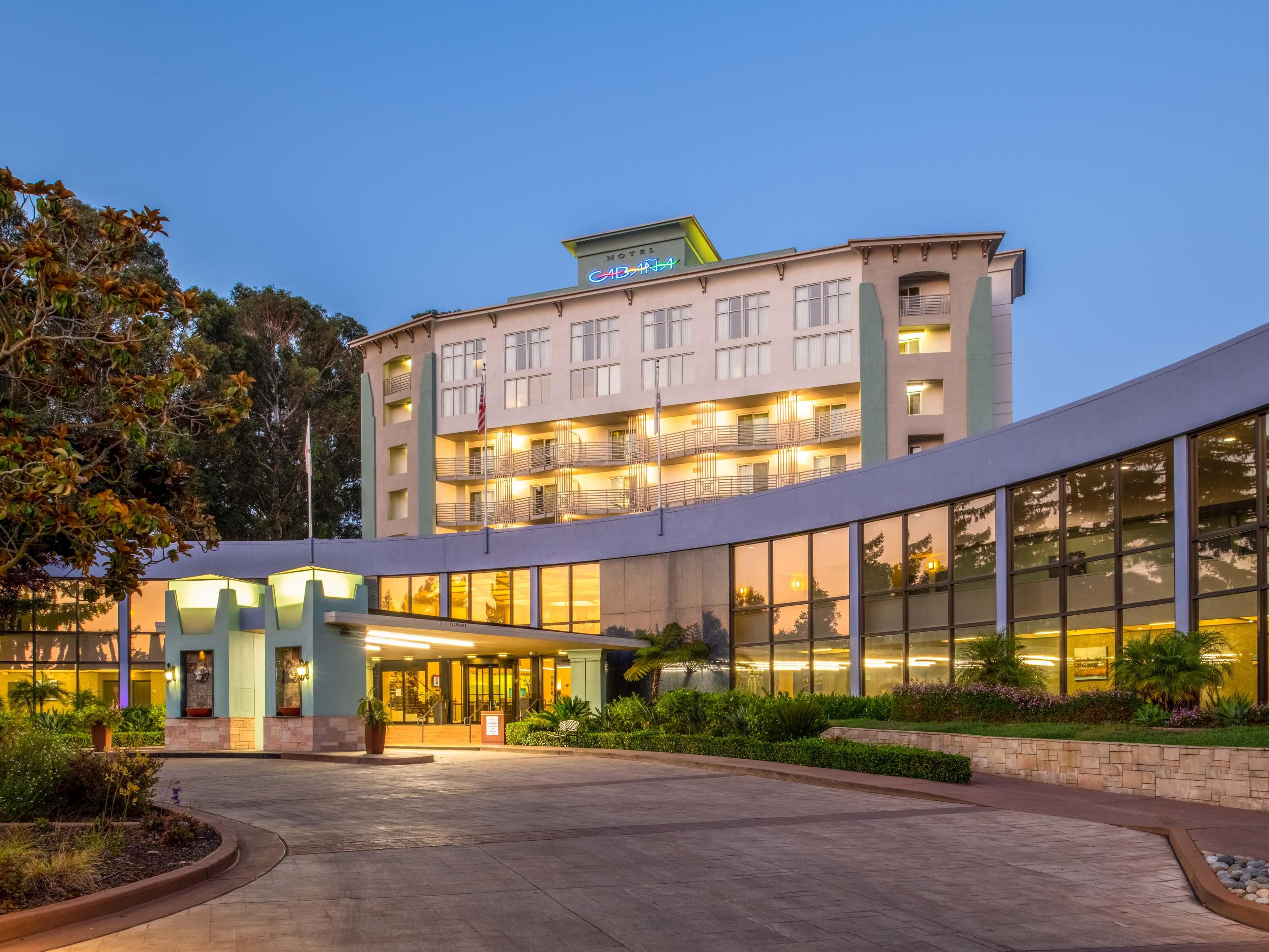
Crowne Plaza Palo Alto
About Clutch
Hyper-Niche Content
Our conferences are specific to niche sub-sets of the technology industry, drilling down into the biggest issues, challenges and market trends facing tomorrow's leaders.
Collaboration first
Enjoy ample networking opportunities, roundtable discussions, interactive group sessions and real-world case-studies that arm attendees with actionable insights.
Dynamic & Bite-Size formats
No more death-by-PowerPoint. Our events are short, sharp and collaborative with a variety of session formats and a 3/4 day commitment to ensure returns on your time investment.
Get In Touch
Contact our event team for any enquiry

Danny Perry
For sponsorship opportunities.

Lili Munar
For guest and attendee enquiries.

Steph Tolmie
For speaking opportunities & content enquiries.

Taylor Stanyon
For event-related enquiries.