
San Francisco AI Engineering & Infrastructure Summit 2026
150+ AI engineers, ML platform leaders, and infrastructure leaders. One room, one day. A fast-moving, peer-led summit about the engineering behind production AI: scaling systems that hold up under real traffic, controlling inference costs, and running agents reliably in production. Free to attend. Register now.

Getting AI to work in a demo is easy. Keeping it reliable in production is where the real engineering begins.
The models and tooling change faster than most teams can re-architect around them. Agents are starting to take real action. And the distance between a prototype that works and a system you would confidently put in front of users keeps getting wider. Most infrastructure and engineering practices were not built for how quickly this is moving.
Meanwhile, you are expected to ship faster, spend less, keep everything reliable, and prove it works at scale. All at once.
The San Francisco AI Engineering & Infrastructure Summit is a closed-door, practitioner-led event for the people doing this work every day. No theory and no sales decks. Just senior engineers and technology leaders comparing notes on what is working, what is quietly breaking, and what they would do differently if they started again tomorrow.
If you want an honest read on how your infrastructure and engineering decisions compare with leading teams across the Bay Area, this is the room to be in.
This is not a conference you sit through. It is a working session with people wrestling with the same problems you are.
We keep it deliberately small and hands-on because the value is in the conversations, not the slides.
Here is how the day actually runs:
- Practitioner keynotes from people who have built and operated production AI systems
- Peer roundtables where you solve real problems in small groups with people facing similar challenges
- Live scenarios the whole room works through together
- Interactive panels you help shape live from your phone
- Structured networking designed to lead somewhere
- Optional one-to-one meetings matched to the challenges you are working through
- Knowledge challenges and prizes to put your thinking to the test
Free to attend. No vendor pitching. Just a genuinely useful day with people who understand the work.
Register now to secure your seat.
Our Speakers




































Agenda
Beat the rush and join us early for complimentary barista-made coffee and breakfast.
The teams pulling ahead in AI are not just using better models. They are making different infrastructure decisions underneath them, and the gap between AI-native and AI-retrofit is widening fast.
This keynote walks through what AI-native infrastructure actually looks like in 2026, where the patterns are converging, and what the rest of the industry will have to confront.
We'll cover:
- The infrastructure choices AI-native teams make differently from day one
- Where established cloud-native patterns break under AI workloads
- What this means for teams trying to retrofit existing infrastructure
AI infrastructure is evolving rapidly, but having access to compute is only the starting point. This keynote explores how organisations can bring GPUs, data, models, platforms and applications together into a unified AI cloud environment that makes it easier to move from experimentation to production. It will examine the practical foundations needed to make AI scalable, accessible and operationally sustainable across the enterprise.
We'll look at:
- How organisations can move beyond simply acquiring compute capacity to building an integrated platform that connects infrastructure, data, models and development tools.
- The capabilities needed to take AI workloads from proof of concept to reliable production, including orchestration, model deployment, data pipelines, observability and performance management.
- How a unified AI cloud platform can support multiple teams and workloads while balancing performance, cost, security and governance, creating a foundation for AI to operate across the organisation.
Most AI prototypes work. Most AI systems serving real users are harder than they look. The gap between the two is where most of the engineering work that matters actually gets done.
This panel brings together engineering leaders who have taken AI from prototype to production at scale, to discuss what broke and what they had to retrofit under pressure.
We'll cover:
- The architectural decisions that turned out to matter once real traffic arrived
- What teams underinvested in early and paid for later
- How the engineering bar for AI is different from traditional software
How do you get one consistent answer to "what's running in our cloud accounts?" when AWS, Azure, and GCP each describe resources differently — without installing a resident agent, package, or background service?
This session walks through how the Teleport team used an AI coding agent, working in a continuous conversational loop rather than a sprint cycle, to design, build, test, and keep extending a single multi-cloud inventory tool that runs entirely on whatever cloud console or client access you already have — normalizing three incompatible cloud APIs into one consistent view, with nothing to deploy and nothing left behind.
- How a consistent, low-touch model got built, AI-driven end to end, across three genuinely different cloud APIs — normalizing EC2/RDS/EKS on AWS, Compute Engine/Cloud SQL/GKE on GCP, and VMs/SQL/AKS on Azure into the same resource-and-identity shape, runnable from a cloud console session with nothing installed and nothing running once you log out.
- How the AI handled its own testing, not just its own coding — gating every change on a build/vet/test pass and deliberately dry-running each new cloud scanner with no credentials configured.
- How the work stayed organized across a continuously growing scope, with bigger changes scoped and agreed before code was written and every change recorded in a changelog noting what was verified and what honestly wasn't.
A live scenario where a major model provider announces an EOL on the model powering your most important product feature. Attendees vote through their phones on migration strategy, capability regression, and engineering trade-offs, with the scenario evolving as the room decides.
A real-world version of a dependency risk problem most senior engineering teams now face and few discuss openly.
How do you move from AI that identifies engineering problems to agents that can detect regressions, propose fixes, test them and safely roll them out? This session explores how the LinkedIn team is developing an agentic service performance and health platform designed to create a continuous loop of detection, diagnosis, experimentation and remediation. The approach has potential well beyond performance, extending to problematic code patterns, language version upgrades and other recurring engineering challenges.
- How the team uses agents to continuously identify performance regressions and other issues across services, investigate potential causes and determine where intervention is needed.
- Explore how agents can move beyond recommending fixes to proposing changes, experimenting with potential solutions and validating whether they actually improve service health before deployment.
- Look at how the same agentic approach can be applied to broader engineering problems, from identifying problematic code patterns to managing language version upgrades, and the guardrails needed to safely move towards increasingly autonomous software maintenance.
AI agents are increasingly being trusted with complex tasks, but measuring whether they are actually performing well can be difficult when outputs cannot be manually reviewed at scale. This case study explores how one organisation built its own benchmark to objectively test an AI agent’s ability to identify application security weaknesses.
The benchmark uses three applications across REST, GraphQL and web environments, each containing known vulnerabilities alongside safe examples designed to test whether the agent can distinguish genuine weaknesses from false positives. A dedicated answer key and automated grading harness then measure exactly what the agent finds, misses and incorrectly reports.
We'll explore:
- How the test corpus was designed to remove obvious clues and create a realistic measure of agent capability.
- How automated grading and coverage matrices reveal weaknesses that are difficult to spot through manual review.
- How the same benchmarking model can be used to evaluate any AI agent whose performance needs to be measured objectively at scale.
Once AI systems start taking actions on behalf of users — calling tools, moving data, triggering workflows — the engineering bar shifts. Prompt injection, tool misuse, data leakage, eval failures, and silent reliability regressions all become live operational concerns, and most teams are figuring out the patterns in real time.
This panel brings together engineering leaders working on the safety, control, and reliability of production AI to discuss what is actually working and where the open problems still sit.
We'll cover:
- How teams are deciding what an AI system is allowed to do and where humans review
- What's working against prompt injection, tool abuse, and data exposure
- How reliability and observability practices are being rebuilt for systems that take action
Delegates choose from a list of peer-to-peer discussion topics covering the engineering challenges that aren't getting solved in public.
Topics include:
- Managing GPU shortages and compute bottlenecks
- Scaling AI from experiments to enterprise: What breaks?
- Designing safety measures for autonomous systems
- Implementing Zero Trust in AI environments
- Human oversight vs. full automation
- Data quality vs. model quality: What's more important?
- Designing explainable and effective AI systems
- Observability in complex AI ecosystems
A fast-paced quiz covering real-world AI engineering trivia, key concepts, and emerging trends. Compete for bragging rights — and a travel voucher — as the top scorer takes the crown.
As AI agents become more autonomous, the platforms and infrastructure supporting them must evolve just as quickly. Explore how organisations are building AI-native foundations that enable agents to develop, orchestrate, and optimise AI capabilities at enterprise scale.
- Build AI platforms that support autonomous agents, rapid development, and continuous improvement.
- Evolve infrastructure, data, and orchestration to enable secure, scalable agentic AI.
- Learn how AI is accelerating software development, operations, and platform engineering across the enterprise.
The model was never the hard part. The harness around it is: what an agent sees, what it can do, and whether its work is allowed to ship. This talk walks through a three boundary architecture (context, action, and verification), drawn from building a HIPAA compliant clinical AI platform where a wrong answer isn't a bug, it's a compliance event, and what it teaches anyone taking agents from prototype to production.
Every agent that searches the web pays twice: once for the search call, and again for the tokens that search puts into the model's context. The answer is usually a few sentences. The agent pays for the whole page, and in a multi-step loop it pays for it again on every turn. We'll show real production traces of where the tokens go and why retrieval, not generation, is the biggest line on most agent bills. Then we'll show what we changed: return the passages a query needs instead of whole pages, tune extraction to the question, and cap how much context the agent can take. We tested this across 12 frontier models and 11,000 blind-graded answers. Token spend fell by more than 90% while accuracy went up. You get a metric (cost per correct answer, not cost per request), an open calculator to run the numbers on your own traffic, and a five-point checklist for finding token waste in your pipeline.
The AI stack is moving fast enough that decisions being made today will look obvious or wrong in 18 months, and nobody is sure which is which. Self-hosting versus managed APIs. Hyperscalers versus dedicated AI clouds. Agent platforms versus building it yourself. Custom silicon versus established GPUs.
The audience votes live on a series of contested questions, the panel argues each result out, and the room votes again at the end to see whether anyone shifted position.
We'll cover:
- Which parts of the stack are converging and which are still genuinely contested
- Where the build-versus-buy line should sit on inference, agents, and evals
- Which bets are most likely to look wrong in 18 months and why
Our event sponsors



Past Speaker Highlights
Past Sponsors

Event Location
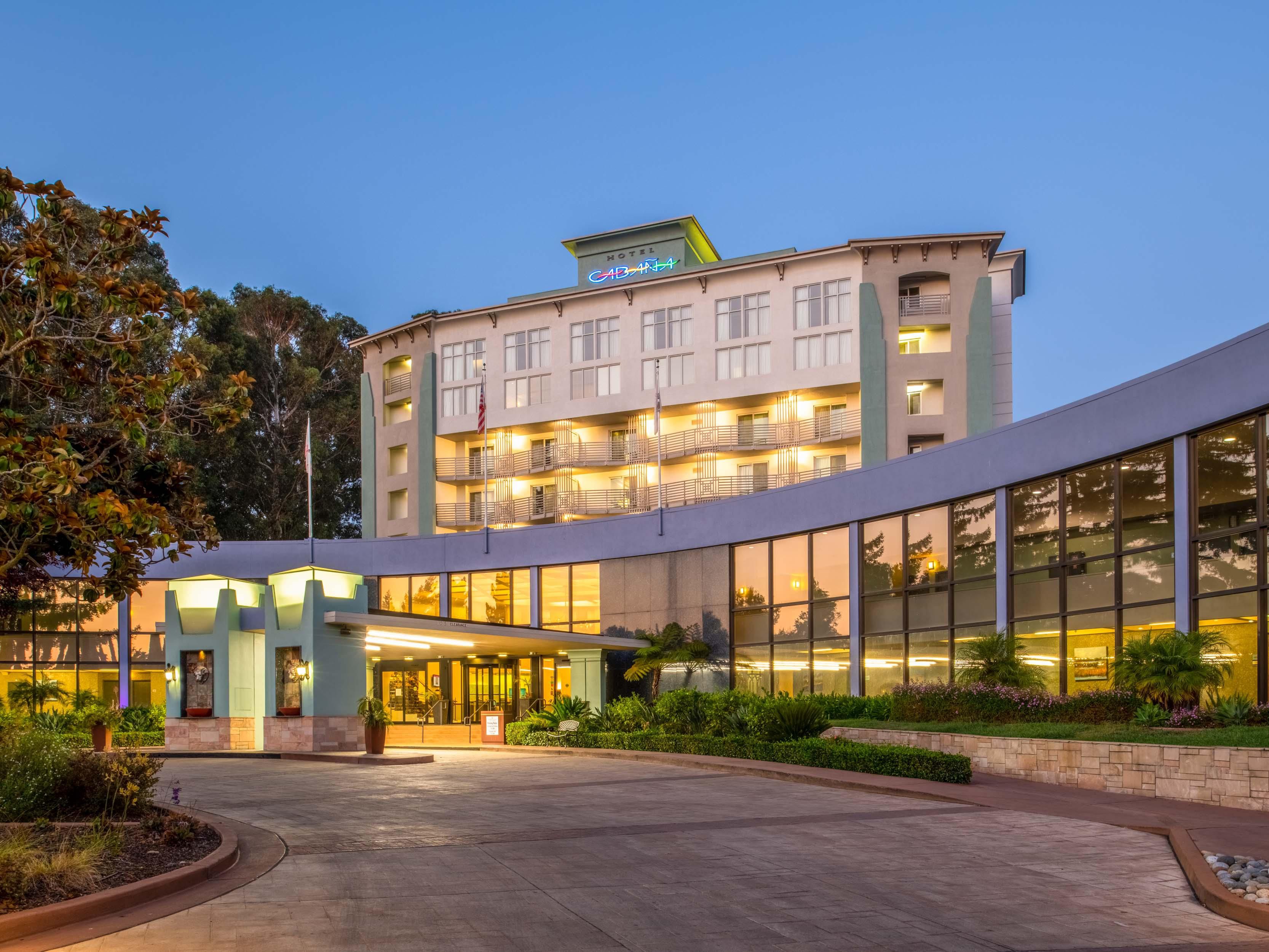
Crowne Plaza Palo Alto
About Clutch
Hyper-Niche Content
Our conferences are specific to niche sub-sets of the technology industry, drilling down into the biggest issues, challenges and market trends facing tomorrow's leaders.
Collaboration first
Enjoy ample networking opportunities, roundtable discussions, interactive group sessions and real-world case-studies that arm attendees with actionable insights.
Dynamic & Bite-Size formats
No more death-by-PowerPoint. Our events are short, sharp and collaborative with a variety of session formats and a 3/4 day commitment to ensure returns on your time investment.
Get In Touch
Contact our event team for any enquiry

Danny Perry
For sponsorship opportunities.

Lili Munar
For guest and attendee enquiries.

Steph Tolmie
For speaking opportunities & content enquiries.

Taylor Stanyon
For event-related enquiries.
Go deeper
The IT conferences in Australia worth a senior leader's time in 2027: CIO, AI, cyber, data, DevOps and government events, with typical dates and costs.
AI in government in Australia: DTA responsible AI policy v2.0, impact assessments, transparency statements, NSW AI Assessment Framework and procurement.
AI coding assistants for large engineering organisations: what the evidence says about productivity, and how to roll out, measure and govern them.